

For typical mid-range 30 W LED solar street lights in 2025, expect factory/wholesale prices from roughly $40–$220 per unit in China, $300–$800 per unit in the United States, and €40–€600 per unit in Europe, depending on battery chemistry, solar panel wattage, lighting optics, and smart controls. Buying decisions should prioritize total lifecycle cost and performance (runtime, lumen maintenance, warranty) rather than lowest upfront price.
1. What a “30 W LED solar street light” includes
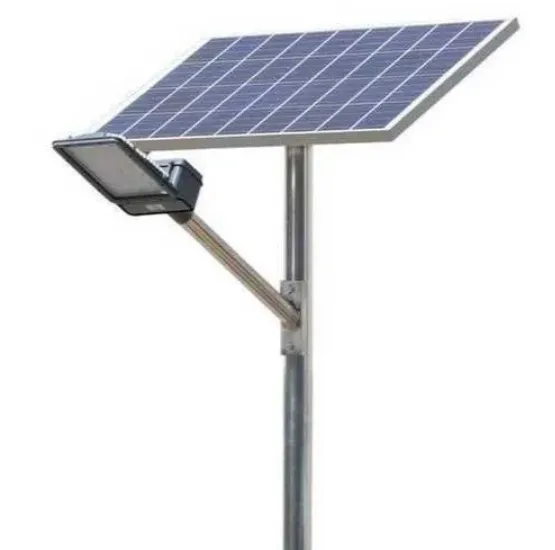
When a supplier quotes a 30 W LED solar street light, the number refers to the LED module’s nominal power. A market-ready product normally includes these elements: LED light engine (30 W nominal), integrated or separate solar panel, battery pack, charge controller (MPPT or PWM), photocell and motion/presence sensor if present, mounting bracket or pole adapter, and the housing with optical lens and thermal management. A “complete set” price usually covers the lamp head, panel, controller, and battery; installation and pole often cost extra.
Because vendors bundle components differently (all-in-one integrated units versus separate panel + battery + luminaire), comparing prices requires confirming what each seller includes.

2. Typical specifications and performance parameters
Below is a compact specifications matrix you should request from any vendor when comparing 30 W products.
| Parameter | Typical range / target |
|---|---|
| LED power rating | 30 W nominal |
| Luminous flux (initial) | 2,700 – 4,200 lumens (depends on LED efficacy and optics) |
| LED efficacy | 85 – 140 lm/W (module dependent) |
| Correlated color temperature (CCT) | 3000 K, 4000 K, 5000 K common |
| CRI | 60 – 80 typical (higher for pedestrian areas) |
| Solar panel | 30 W – 80 W monocrystalline typical for 12–16 hours autonomy |
| Battery type | LiFePO4 (preferred) or SLA/AGM (cheaper) |
| Battery capacity | 12 V 20 Ah – 12 V 60 Ah equivalent depending on autonomy |
| Controller | MPPT recommended for higher efficiency |
| Ingress protection | IP65 – IP67 |
| Operating temperature | −20°C to +60°C |
| Expected life (LED) | 50,000 hours L70 typical |
| Warranty | 2 – 5 years (battery often shorter) |
Ask for IES/IESNA files or photometric reports and for lumen depreciation curves to compare real delivered light, not just rated lumens.
3. Price bands and representative examples (China, United States, Europe)
Prices fluctuate because sellers vary components, warranty, shipping method, and certification. Below are empirically supported ranges and representative sources to anchor expectations.
-
China (factory / B2B wholesale): Typical landed factory prices for 30 W all-in-one units can range from $40 to $220 per unit depending on battery type, panel size, and order quantity. Low-end complete units (basic SLA battery and small panel) cluster near the low end; LiFePO4 equipped models with larger panels sit toward the high end.
-
United States (retail / higher regulatory and logistics costs): Expect $300 to $800 per unit for packaged models sold to contractors or municipalities. US prices are higher due to certification, thicker warranties, local support, and inclusion of poles or mounting when bundled. Example listings for small off-grid solar street products show prices in the several hundreds of dollars.
-
Europe (retail / mixed): Europe presents the widest spread: €40 to €600 depending on the seller type. Some EU retailers list basic units at modest euro prices for backyard or garden applications, while higher-spec street systems with certification and extended warranties reach the upper range.
A consolidated country comparison table (rounded for readability):
| Market | Typical low | Typical mid | Typical high |
|---|---|---|---|
| China (factory) | $40 | $90 | $220 |
| USA (retail/contractor) | $300 | $450 | $800 |
| Europe (retail) | €40 | €150 | €600 |
Use these as negotiation anchors; always confirm included components.
4. How the price breaks down — itemized cost composition
Understanding cost composition explains why prices differ.
-
LED module and optics (20–30%): High-efficacy LEDs, quality lenses and thermal design raise initial price but reduce maintenance and energy loss.
-
Battery (25–40%): Chemistry matters. Sealed lead acid is cheap upfront; LiFePO4 costs more but lasts 4–6× longer and tolerates deep discharge.
-
Solar panel (10–25%): Panel wattage and cell type (mono vs poly) influence cost and required roof/pole area.
-
Controller and electronics (5–15%): MPPT controllers cost more than PWM but increase charging efficiency and runtime.
-
Housing, mounting, certification (5–15%): Die-cast aluminum, IP and IK ratings, and powder coating add cost.
-
R&D, warranty, and brand premium (5–15%): Reputable brands that offer testing, CE/UL/EN certifications, and logistics support charge more.
-
Shipping, customs, and distribution (varies): For imported units, shipping and duties materially affect delivered cost.
The buyer who focuses only on the LED wattage misses battery longevity and system design, which are the largest drivers of lifecycle cost.
5. Key factors that push the price up or down
Below are the most influential levers to watch when comparing quotes.
-
Battery chemistry and capacity: LiFePO4 commands a higher price but reduces replacement cycles. SLA/AGM lowers upfront price but raises long-term replacement and maintenance costs.
-
Solar panel wattage and efficiency: Higher wattage or higher cell efficiency increases panel cost but reduces needed panel area and improves autonomy.
-
Controller type and smart features: MPPT and intelligent dimming, motion sensing, and remote monitoring add cost but improve energy use and O&M.
-
Optics and lumen maintenance: Premium lenses and thermal management keep lumen output high over time, lowering replacement frequency.
-
Certifications and testing: CE, RoHS, EN-specific tests, and UL listings cost money up front but are often required by municipal procurement.
-
Order quantity and supplier model: Larger bulk orders reduce per-unit cost; retail channel orders have higher margins.
-
Shipping, tariffs, and local assembly: Local assembly or distributors increase price but provide faster service and easier warranty claims.
-
Warranty terms: Longer and more generous warranties usually reflect higher component quality and are priced accordingly.
When suppliers give a single price, ask for the component list and expected replacement schedule so that you can calculate lifecycle cost rather than comparing only sticker prices.
6. Procurement checklist: questions every buyer should ask
Use this checklist to ensure apples-to-apples comparison.
-
Does the quoted price include pole, foundation, and installation?
-
What battery chemistry, nominal capacity, and cycle life are included?
-
Is the solar panel mono or poly crystalline and what is its wattage?
-
Which controller type is used: MPPT or PWM? Is there remote monitoring?
-
What are photometric files, beam angle, and delivered lux at designer heights?
-
What is the warranty breakdown by component (LED, battery, panel, electronics)?
-
Are compliance certificates provided (CE/EN/UL) and can supplier provide test reports?
-
What is expected lumen depreciation (L70 at hours) and at what ambient temperature?
-
Does the supplier offer local service, spare parts, and replacement policies?
-
For public projects, is the product on any government-approved vendor lists?
Require a spec sheet and an itemized quote. If a vendor resists breaking costs down, treat that as a red flag.
7. Total cost of ownership and payback: a simple example
Lifecycle thinking makes procurement decisions data-driven.
Example scenario (illustrative):
-
Street with 100 poles, 12 hours average night lighting.
-
30 W LED nominal (assume 100% duty when on)
-
Electricity price for grid-connected conventional lighting: $0.15/kWh
-
Replacement schedule: SLA battery replaced every 2 years; LiFePO4 replaced every 8 years
-
LED lifetime: 50,000 hours (~11 years at 12 hr/day)
Annual operating energy (per lamp):
30 W × 12 hr/day × 365 = 131.4 kWh/year
At $0.15/kWh, grid electricity cost equivalent = $19.71/year per lamp
Upfront cost examples (unit):
-
Low-end China SLA unit: $80 upfront, battery replacement $40 every 2 years
-
LiFePO4 higher quality unit: $220 upfront, battery replacement negligible for first 8 years
Over a 8-year period, approximate total cost (purchase + battery replacements + energy equivalent) favors higher upfront LiFePO4 when accounting for fewer replacements and better reliability, especially where grid connection cost or availability is poor.
Precise ROI depends on local labor costs for replacement, vandalism risk, and the discount rate of the project. Always run a 5- to 10-year lifecycle cash-flow analysis that includes maintenance, replacement, and salvage value before awarding large municipal contracts.
8. Market picture and short-term trends that affect price (2024–2026)
The global solar street lighting market is in growth mode and has several near-term dynamics that will steer prices.
-
Market expansion and volume growth: Market research firms report strong expansion in solar street lighting with multi-billion dollar global market valuations and double-digit growth projections in some reports. Increased demand tends to support broader supplier competition, which can compress manufacturing margins and drop factory prices for commodity systems.
-
Battery cost trajectory: Battery costs (especially Li-ion variants) have generally trended downward but remain the largest single component. Wider adoption of LiFePO4 for outdoor lighting is increasing average system cost slightly but improving lifecycle economics.
-
Smart features and IoT: Integration of remote monitoring, adaptive dimming, and fleet analytics raises the price of street lighting but offers O&M savings that can justify higher CAPEX in many projects.
-
Supply chain sensitivity: Shipping rates, tariff changes, and certification waiting times can introduce short windows of price volatility, especially for imported systems. Large orders and early sourcing of critical components help lock price.
-
Regulation and procurement standards: Public tenders increasingly require higher performance and longer warranties; this filters out the cheapest commodity products and pushes the procurement average price upward in regulated markets.
Because the market is both maturing and fragmenting between low-cost commodity units and high-value smart systems, buyers who balance lifecycle cost and operational data receive the best long-term outcomes.
9. Installation, maintenance, and warranty — hidden drivers of cost
Installation complexity and local conditions shape total cost.
-
Mounting and civil works: Foundations, concrete, and traffic management for pole installation often exceed the luminaire cost in municipal deployments. Budget for these separately.
-
Maintenance model: Ask suppliers whether spare battery modules and controllers are modular and quickly replaceable. Remote monitoring contracts reduce truck rolls and pay for themselves on larger installations.
-
Vandalism and theft: In some regions, panels and batteries are attractive targets. Anti-theft hardware and warranty terms addressing vandalism risk may raise price but reduce replacement frequency.
-
Warranty clarity: Make sure warranty clauses spell out replacement timelines, failure modes, and transportation costs. Batteries usually have the shortest warranted life; negotiate replacements into the contract for major projects.
10. Practical procurement scenarios and quick recommendations
-
Small rural project (10–50 lights), limited budget: Choose a reliable Chinese factory model with LiFePO4 if possible; buy slightly overspecified panel wattage (to allow for seasonal cloud cover) and negotiate a transparent spare parts package. Expect to pay in the $80–$180 range per unit delivered.
-
Urban municipal project, strict standards: Prioritize vendors with test reports, CE/EN or UL, and service presence. Budget for $350+ per assembled unit including local installation; higher if pole and civil works included.
-
Commercial campus or private estate: Consider integrated units with remote monitoring to reduce operating cost. Mid-tier European or US brands frequently offer better O&M packages even at higher price points.
11. Specification matrix (example) — use when asking for quotes
Ask vendors to fill this exact matrix to make fair comparisons.
-
LED wattage (W):
-
Rated lumens (lm):
-
LED efficacy (lm/W):
-
CCT (K) / CRI:
-
Panel type and wattage:
-
Battery chemistry, nominal capacity (Ah) and voltage:
-
Controller type (MPPT/PWM), dimming, sensors:
-
Autonomy (hours at rated load):
-
IP/IK rating:
-
Lumen depreciation (L70 hours):
-
Warranty: LED / battery / electronics / housing:
-
Certifications: CE / EN / UL / RoHS:
-
Net weight and packing dimensions:
-
FOB and CIF pricing for specified qty:
Require test certificates for key claims.
12. Frequently asked questions
1) What is the real difference between an “integrated” all-in-one unit and a modular separate system?
All-in-one designs combine panel, battery, and lamp in a single housing for compact installation and lower upfront logistics. Modular systems separate panel and battery and allow more flexible placement of the panel for better sun exposure; modular systems tend to be easier to service but may cost more in installation labor.
2) Is LiFePO4 always worth the extra upfront cost?
In most public and commercial applications, yes. LiFePO4 has longer cycle life, better thermal stability, and deeper usable capacity, producing lower replacement frequency and lower O&M costs over 5–10 years.
3) How many hours of autonomy should a 30 W light provide?
Designers typically target 12–24 hours of autonomy with 2–3 cloudy days of reserve for single-night operation. Exact battery sizing depends on panel wattage, local insolation, and whether dimming or motion sensing is used.
4) How do I compare lumen outputs between vendors?
Request the delivered lux at mounting height or IES file; comparing raw lumen claims without optics and thermal derating is misleading.
5) Are cheap Chinese imports a bad choice?
Not necessarily. Many reputable Chinese factories produce competitively priced, well-engineered units. Focus on components, test reports, and supplier references rather than price alone.
6) What warranty length should I expect?
LED modules often have 3–5 year warranty; batteries vary: SLAs often 1–2 years, LiFePO4 commonly 3–5 years. For municipal projects, negotiate multi-year service agreements.
7) Will smart features improve payback?
Yes, adaptive dimming, motion sensors, and fleet monitoring reduce energy and maintenance costs and can shorten payback despite higher CAPEX.
8) How will energy prices and policy affect pricing?
Rising grid tariffs and incentives for renewables make solar street lighting more attractive; procurement policies that require higher standards will increase average market price but improve lifecycle value.