

For private streets, gated communities, rural lanes, and estate driveways, a purpose-built solar light private street lamp without electricity delivers dependable night-time illumination, lower lifetime cost, and quicker installation than a conventional grid light while meeting safety and aesthetic needs when properly designed and installed. With modern LED optics, a LiFePO₄ battery, and a correctly sized solar array and controller, an off-grid street lamp will run autonomously through typical local weather patterns, require minimal routine servicing, and provide the best trade-off between upfront investment and multi-year operating savings.
1. What this product is and who benefits
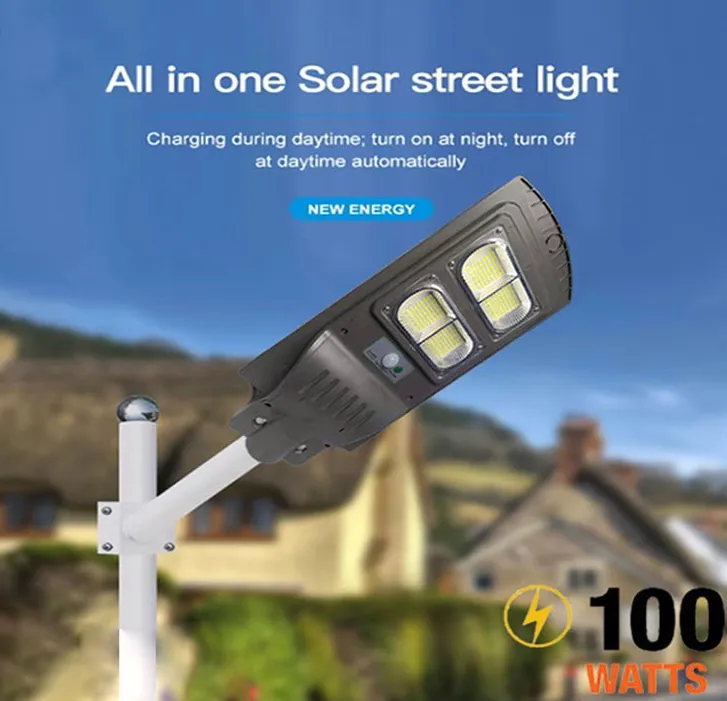
A solar light private street lamp without electricity is a standalone fixture that combines photovoltaic panels, an energy storage pack, an LED light module, and an electronic controller into a single system or coordinated set of components mounted on a pole. It is intended for places where grid power is unavailable, unreliable, or where owners prefer a lower-impact, lower-operating-cost alternative. Typical buyers are homeowners associations, private estate managers, small rural municipalities, rural lodges, resort operators, farms, and property developers who want safe, attractive, and low-maintenance lighting without trenching and wiring.
Primary benefits include: no ongoing electricity bills for lighting, elimination of excavation and wiring costs, resilience to grid outages, and rapid deployment. When chosen and sized correctly, these lamps meet street-level safety standards and provide consistent service through seasonal variation.

2. How an off-grid solar street lamp works — components and functions
A complete off-grid street lamp is comprised of the following key components:
-
Photovoltaic module: mono-crystalline panels are common due to high efficiency and compact size. Panels harvest sunlight during daytime.
-
Battery pack: stores energy for night operation. Modern units use LiFePO₄ for longer life and safety, though sealed lead-acid and gel are still seen in budget systems.
-
LED luminaire: high-efficacy LED array and optics tuned for roadway distribution. Lumen output and beam pattern determine spacing and pole height.
-
Controller / MPPT: manages charging, prevents overcharge/discharge, controls dimming schedules, and may support motion sensing and remote telemetry.
-
Pole and mounting: structural support sized for wind load, often galvanized steel or aluminum, with corrosion-resistant finish.
-
Optional extras: motion sensors, dusk-to-dawn photo sensors, remote monitoring (GSM/LoRa), and anti-theft mounting features.
The controller coordinates energy flow so that, during daylight, excess energy charges the battery while the controller prepares scheduled nighttime output. If configured, motion sensing increases brightness only when pedestrians or vehicles are detected, extending autonomy in low-sun periods.
3. Key performance metrics and specification checklist
When evaluating or specifying a private street lamp, prioritize these metrics:
-
Luminous flux (lumens): measured output; choose per required illuminance. Typical residential street levels are 5 to 15 lux on the carriageway; pathway lighting can be lower.
-
Efficacy (lm/W): system lumens per watt; higher values reduce panel and battery sizing.
-
Color temperature (CCT): 3000 K to 5000 K are common; lower CCT reduces glare and preserves night ecology.
-
CRI (Ra): aim for Ra 70 or higher for general visibility, Ra 80+ for premium applications.
-
Operating hours per night: typical dusk-to-dawn is 8 to 12 hours; dimming strategies can reduce energy use.
-
Autonomy days: number of cloudy days the system must cover, typically 2 to 5 days depending on location.
-
Battery depth of discharge (DoD) and warranty: LiFePO₄ systems commonly allow 80 percent usable DoD with warranties of 3 to 7 years.
-
Ingress protection: IP65 or IP66 for outdoor electronics; IK08 or higher for impact resistance.
-
Pole height and spacing: derived from lumen output and beam distribution, commonly 4 to 7.5 meters for private streets.
-
Certifications: CE, IEC, RoHS, relevant local electrical safety approvals.
Use this checklist to compare products and to calculate required panel area and battery capacity.
4. System design: sizing panels, batteries, LED output and autonomy
Designing a reliable off-grid lamp requires simple electrical budgeting plus allowances for losses and climate.
Stepwise sizing method (practical)
-
Determine average nightly energy need: multiply LED power (W) by nightly hours to get Wh per night.
-
Adjust for control strategy: add any additional consumption from controllers, sensors, and inefficiencies (multiply by 1.2 to 1.4 depending on system).
-
Decide autonomy: choose days of autonomy (2 to 4 days is common for private roads). Multiply nightly Wh by days of autonomy.
-
Select battery capacity: convert Wh to battery Ah using nominal system voltage and adjust for usable DoD. For example, for a 12.8 V LiFePO₄ battery, Ah = Wh / 12.8 V divided by DoD fraction.
-
Size the PV array: calculate daily required Wh and divide by average peak sun hours for the site, then add 20 to 30 percent to cover charging losses and seasonal variation. MPPT controllers reduce mismatch losses.
-
Confirm panel area and mechanical tolerance: ensure panels fit on pole or nearby structure and verify wind load and mounting brackets.
Example formula summary:
-
Nightly Wh = LED Watt × hours per night.
-
Battery Ah required = (Nightly Wh × autonomy days × safety margin) / (Nominal V × DoD).
-
PV Wp required = (Nightly Wh × 1.3) / Peak Sun Hours.
Several industry calculators and step-by-step posts follow this recipe. Use site solar irradiance (peak sun hours) from local meteorological data for best results. Practical examples and worked guides exist from reputable suppliers.
5. Installation, pole placement and spacing for private streets
Proper pole height, luminaire aiming, and spacing avoid dark gaps and reduce glare.
-
Recommended pole heights for private streets: typically 4 to 7.5 meters for residential lanes; 8 to 12 meters only for larger private roads.
-
Spacing guidance: for typical residential luminaires, spacing can be in the range of 15 to 30 meters between poles depending on lumen output and pole height. Many residential installations use 20 to 25 meters spacing.
-
Mounting angle: panels should face true south in northern hemisphere or true north in southern hemisphere, tilted at the site latitude for year-round performance or optimized slightly lower for summer-heavy use. Panels on poles use adjustable brackets.
-
Clearance and security: ensure panels are higher than nearby shrubs and that the battery enclosure is accessible for maintenance yet protected from vandalism. Use lockable hardware.
-
Foundations: pole foundations sized for wind exposure class; use anchor bolts or ground sleeves for removable poles.
Site photometry is recommended for high-value installations; for simpler private roads, follow spacing tables based on pole height and lumen package.
6. Battery chemistry, lifetime and safety — comparison table
Battery choice is a core decision. Below is a concise comparison of commonly used chemistries.
| Feature | Lead Acid (sealed VRLA) | Gel / AGM | LiFePO₄ (Lithium Iron Phosphate) |
|---|---|---|---|
| Typical cycle life | 300–800 cycles | 500–1000 cycles | 2000–5000 cycles |
| Depth of discharge (recommended) | 30–50% | 50% | 70–90% |
| Temperature performance | Poor at extremes | Moderate | Good wide range |
| Safety / thermal stability | Lower | Lower | High thermal stability |
| Weight and size | Heavy | Heavy | Lighter, compact |
| Maintenance | May require periodic checks | Low | Very low |
| Typical warranty | 1–2 years | 2–3 years | 3–7 years |
| Typical use case | Low budget | Mid market | Best long-term value, premium. |
Recommendation: for private street lighting where lifetime, safety and maintenance intervals matter, LiFePO₄ is often the best overall choice despite higher initial cost. It supports deeper DoD, more cycles, and wider temperature range.
7. Durability, IP/IK ratings, environmental considerations and standards
Outdoor lighting must withstand moisture, dust and mechanical impact.
-
Ingress protection: choose IP65 as minimum for fixtures; IP66 preferred where high-pressure water jet or heavy dust is possible. Controllers and battery enclosures should match similar ingress protection.
-
Impact resistance: IK08 is a common standard for moderate impact; IK10 for high vandalism risk.
-
Corrosion resistance: powder coatings, anodized aluminum, or hot-dip galvanized poles for coastal or saline environments.
-
Thermal design: LED and battery heat management extends service life; look for fixtures with thermal paths and passive heat sinks sized for continuous operation.
-
Certifications: CE, IEC 62471 for photobiological safety, and local electrical safety approvals where required.
Design systems with wildlife and light pollution in mind. Use optics that minimize upward light and glare; select warmer CCT in sensitive habitats. Many modern solar street lights incorporate dimming and smart scheduling to reduce light during low-activity hours.
8. Cost comparison and total cost of ownership (TCO)
Solar street lamps have higher initial purchase price but avoid trenching and ongoing electricity charges. Typical cost drivers:
-
Unit hardware cost (luminaire, panel, battery, pole)
-
Installation labor and civil works (trenching, cabling) for grid lights
-
Operation and electricity over lifetime for grid lights
-
Battery replacement schedule and other maintenance costs
A simplified TCO example (illustrative, per fixture, 10 year horizon):
| Item | Grid-connected lamp | Solar off-grid lamp |
|---|---|---|
| Initial unit cost | $300 | $700 |
| Installation (wiring + trenching) | $800 | $200 |
| Annual energy cost (10 yrs) | $450 ($45/yr) | $0 |
| Maintenance & replacements | $200 | $300 (battery at year 5) |
| 10 year total | $3,500 | $3,000 |
This simplified table shows how, depending on local labor and energy prices, solar can reach payback within the first 5 to 8 years and produce lower costs over a decade. Use local tariff and installation quotes to compute exact payback. Real case studies and comparative reports demonstrate these trends.
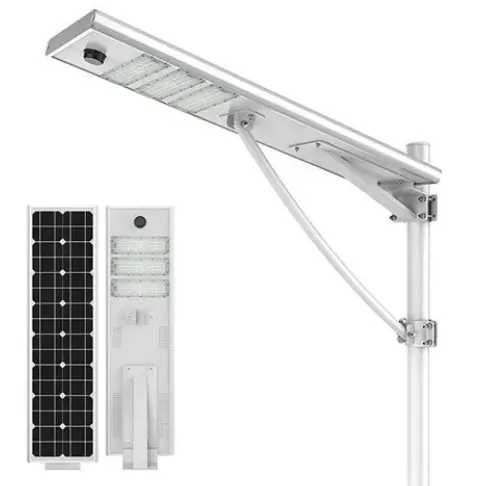
Integrated Solar Light Private Street Lamp Without Electricity
9. Operation modes, smart controls and lighting strategies
To maximize autonomy and reduce light pollution, modern controllers support multiple operating strategies:
-
Dusk-to-dawn steady: constant level whole night. Simple but energy intensive.
-
Dim-then-boost: lower base level with temporary boosts when motion is detected. Extends battery life substantially.
-
Time-scheduled scenes: higher output early evening, reduced through late night, peak again pre-dawn.
-
Remote telemetry: allow health monitoring, remote dimming, and schedule updates to manage fleets.
-
Adaptive control: some controllers adjust based on measured state of charge and cloud forecasts, preserving autonomy.
For private streets, a recommended setup is a dimmed baseline (30 to 50 percent) with motion-activated full output for safety events. This balances visibility and energy conservation.
10. Maintenance schedule, troubleshooting and spare parts planning
Solar street lights are low maintenance when compared with mains street lighting, but predictable servicing prevents failures.
Typical maintenance tasks and schedule:
-
Quarterly visual check: clean PV glass, remove debris, check pole and mounting hardware.
-
Semi-annual functional test: verify controller logs, check battery voltage and charging behavior.
-
Annual performance review: measure light output and compare to initial specification; check battery capacity and replace if degraded.
-
Battery replacement: plan for replacement at cycle end; LiFePO₄ often lasts 5+ years depending on cycles and ambient temperature.
-
Spare parts to keep on hand: controller, fuses, lamp driver, spare battery pack if fleet is large.
Maintain a maintenance log for warranty claims and to spot long-term trends. Remote monitoring reduces site visits and quickly highlights failing components.
11. Practical buying checklist and reasons to choose SunplusPro
When selecting a supplier and model, verify:
-
Full component specifications: panel make, battery chemistry and capacity, LED brand and efficacy, controller features.
-
Warranty terms for each component, not just the full unit. Prefer multi-year battery guarantees.
-
Third-party test reports or certificates for IP rating, photometry and electrical safety.
-
Local service and spare parts supply chain.
-
Flexibility for customization: pole finish, lantern design, lumens, CCT, motion sensors and remote telemetry.
-
Factory direct pricing and custom logos or packaging if required.
SunplusPro offers factory pricing, customization for private development projects, and tailored system design for autonomy and durability. Our product portfolio includes integrated and modular systems, LiFePO₄ battery options, and controllers with motion sensing and GSM telemetry. Choosing a factory with production control reduces lead times and ensures consistent quality.
Tables — Examples and quick references
Typical private road spacing vs lumen package and pole height
| Pole height (m) | Typical lumen package (lm) | Typical spacing (m) | Recommended use |
|---|---|---|---|
| 4 | 2000–3500 lm | 12–18 | Footpaths, short cul-de-sacs |
| 5 | 3000–5500 lm | 15–22 | Residential lanes |
| 6 | 5000–8000 lm | 20–30 | Primary private road access |
| 8 | 8000–15000 lm | 25–40 | Wide private drives and estate roads |
Note: exact spacing depends on beam distribution and local standard for illuminance levels.
Quick spec comparison of common integrated types
| Feature | All-in-one integrated unit | Modular separate components |
|---|---|---|
| Ease of installation | Very high | Moderate |
| Ease of maintenance | Moderate (battery built-in) | High (battery accessible) |
| Customization | Limited | High |
| Shipping size | Compact | Bulky |
| Typical applications | Small projects, remote spots | Larger projects where serviceability matters |
12. Safety and regulations
Check local lighting ordinances and road safety standards for minimum illuminance on private streets. While private roads often have fewer mandatory requirements than public highways, ensuring proper lux levels prevents liability. If lighting crosses property lines, confirm homeowner association rules and municipal permits. When in doubt, consult a local lighting engineer for photometric analysis.
13. Sourcing, warranties and procurement tips
-
Request full component lists and independent test reports.
-
Ask for real performance photometry rather than manufacturer claims.
-
Negotiate spare parts and battery replacement terms; battery warranty is high value.
-
Verify packaging and transport protection for panels and batteries, especially during long shipments.
-
Procure a small pilot batch for site testing before a large roll-out.
14. FAQs
-
How long will a solar street lamp run through a cloudy spell?
The autonomy depends on battery capacity and design days of autonomy. Typical designs specify 2 to 5 days. Proper sizing uses local average peak sun hours and applies a safety margin to account for multi-day cloudy periods. -
Which battery type lasts the longest for private street lighting?
LiFePO₄ batteries normally offer the best combination of cycle life, safety, and usable depth of discharge compared with lead acid and gel options. -
Can I mount the solar panel separately from the lamp head?
Yes. Separating panel mounting from the lamp head allows optimized panel tilt and reduced wind load on the pole; it also simplifies maintenance. -
Do these lights work during power outages?
Yes. Off-grid solar lamps are independent from the grid and remain operational as long as their batteries are charged. They are ideal for backup resilience. -
How often do I need to clean the solar panel?
Cleaning frequency depends on local dust and pollen. A quarterly visual check and cleaning is a common baseline, with more frequent cleaning in dusty or coastal regions. -
Are motion sensors necessary?
Motion sensors are optional but recommended when you want to reduce consumption and extend battery life; they raise brightness only when activity is detected. -
What is the expected maintenance cost compared to grid lighting?
Over a multi-year horizon, solar lights usually require lower routine maintenance and no electricity costs. Battery replacement is the major periodic cost. -
Can I expand an installation later with more lamps?
Yes. Design the first phase with consistent pole types, controllers and mounting so subsequent fixtures match photometrically and functionally.
15. Summarized evidence and authoritative notes
-
Comparative industry analyses and manufacturer whitepapers show solar street lighting frequently has lower lifetime cost versus trenching and mains supply for low-to-moderate density private projects.
-
Practical battery and solar sizing methodologies follow a standard energy budget calculation: estimate nightly Wh, choose autonomy days, convert to battery Ah and PV Wp based on peak sun hours. Several vendor guides and step-by-step articles illustrate this approach.
-
Modern integrated solar street lights commonly use LiFePO₄ chemistry for safety and long life, and products with IP65/IP66 and IK08 ratings are standard among reputable manufacturers.
Final recommendations
-
For private streets with moderate traffic, choose LED packages between 3000 and 8000 lumens and pole heights of 4 to 6 meters.
-
Specify LiFePO₄ batteries with an 80 percent DoD rating and production warranties of 3 to 7 years.
-
Design for 2 to 4 days autonomy and size the PV array using local peak sun hours plus a 20–30 percent margin.
-
Use controllers supporting dimming and motion sensing to extend battery life and reduce light pollution.
-
Choose IP65 or IP66 enclosures and IK08 or better if vandalism is a concern.
-
Pilot one or two lamps on site before mass ordering to validate performance and photometric spread.