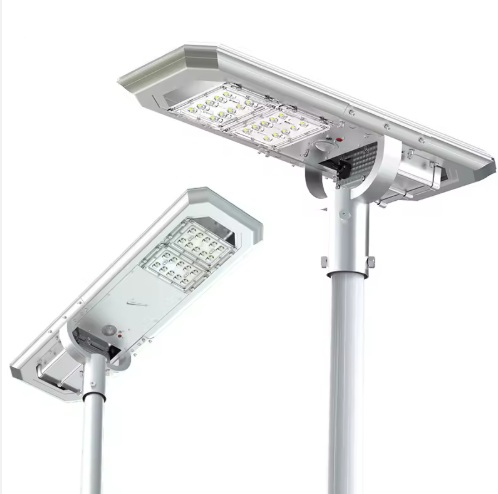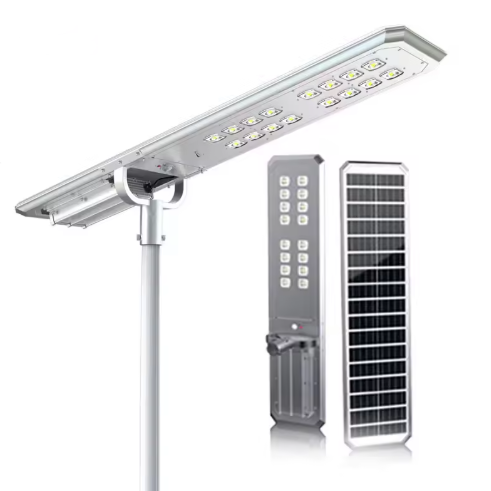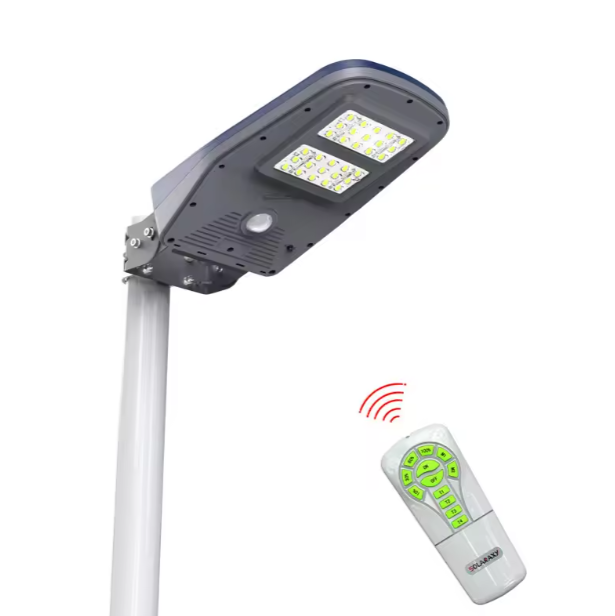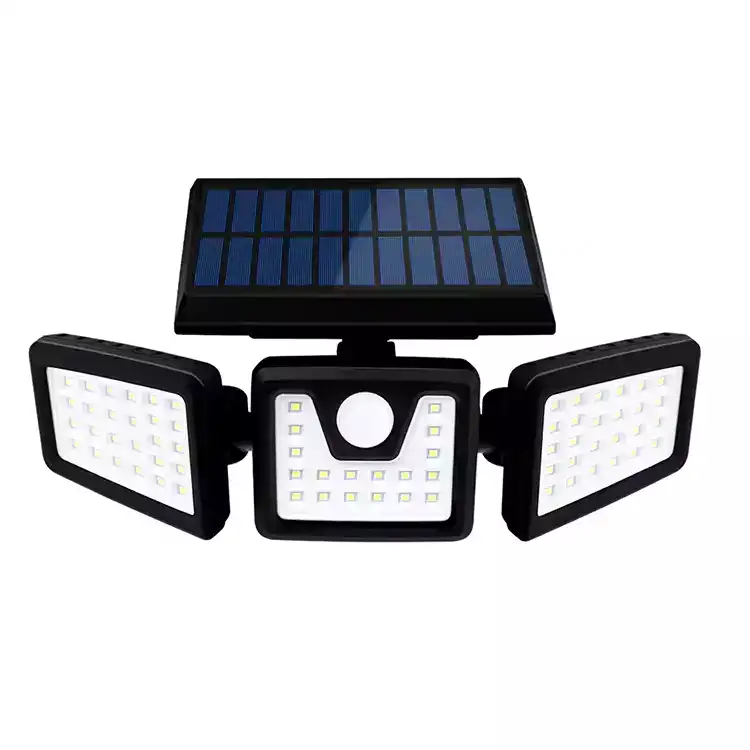

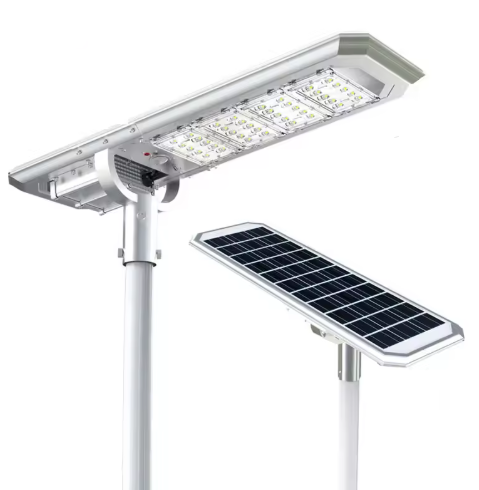
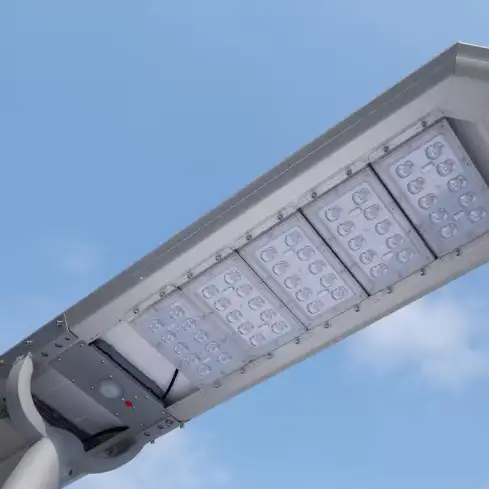
The 40W 12V DC LED solar street light with an IP65 enclosure is an efficient, robust option for small to medium urban roads, residential streets, pathways, and parking aisles; when specified and installed correctly it provides reliable night-time illumination, low operating cost, predictable maintenance needs, and regulatory compliance for outdoor lighting projects. For dependable field performance choose fixtures that carry independent photometric and thermal test reports (LM-79 and LM-80 family test data), module certification against IEC PV qualification standards, and batteries that meet UN transport safety testing where required; pair the luminaire with a solar array sized to provide a minimum of three to five nights of autonomy under local irradiance conditions, include over-voltage and surge protection, and maintain mounting height, spacing, and aiming to meet roadway illuminance or luminance targets.
1 Product overview and intended uses
A 40W, 12V DC LED solar street light combines a solid-state light source rated at forty watts, an on-board or separated photovoltaic array, battery storage sized to maintain operation through night-time hours, and a control module that regulates charge and discharge. Typical deployments include secondary roads, residential streets, campus paths, bike lanes, municipal parks, and commercial parking strips. Benefits include elimination of trenching and grid connection, predictable payback time in locations with moderate sunlight, and lower maintenance frequency relative to conventional high-pressure sodium systems when quality components are used. Real-world performance depends on local climate, tilt and azimuth of the PV array, battery temperature, optical system efficiency, and electrical conversion losses.
2 Key technical specifications summary
| IP Rating | IP65 | Lighting solutions service | Project Installation |
| Warranty(Year) | 3-Year | Place of Origin | Guangdong, China |
| Application | Road | Color Temperature(CCT) | 5700K |
| Light Source | LED | Power Supply | Solar |
| Model Number | SSL-34 | Brand Name | SRESKY |
| Certification | RoHS, CE | Color Rendering Index(Ra) | 70 |
| Lamp Body Material | Aluminium & PC | Lamp Luminous Efficiency(lm/w) | 230 |
| Lamp Luminous Flux(lm) | 4000 | Lifespan (Hours) | 50000 |
| Solar Cell | Li-Ion battery | Support Dimmer | Yes |
| Working Temperature(°C) | -20 – 60 | Type | Portable 40W 12V DC Led Solar Street Lights… |
| Solar panel | Polycrystalline Silicon | Battery | Rechargeable Lithium Battery |
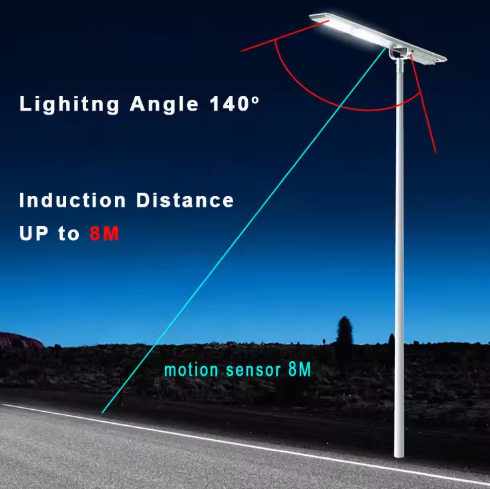
| Lighting mode | 3 Modes (Motion Sensor) | Install Height | 4M ~ 6M |
| Solar Charging Time | 10 hours by bright sunlight | Lighting Time | 10 Nights + |
| Size | 963 × 303 × 84mm | CRI (Ra>) | 70 |
3 IP65 rating explained and practical meaning for outdoor luminaires
IP codes describe protection of an enclosure against solids and liquids. The system labeled IP65 means the first digit 6 indicates full protection against dust ingress creating a dust-tight enclosure, and the second digit 5 indicates protection against water jets from nozzles projected from any direction at low pressure. For outdoor luminaires this rating implies the fixture will resist dust accumulation that causes electrical shorts and will withstand normal rain and light jet cleaning without water entering electrical compartments. For coastal locations salt spray resistance and additional conformal coatings should be specified, since IP65 only addresses intrusion not chemical corrosion. For testing procedures and the international reference consult the IEC IP pages.
4 Optical and electrical performance: LED testing standards and lumen maintenance
High confidence in long-term performance requires independent photometric and electrical testing. The Illuminating Engineering Society (IES) LM-79 family describes procedures for measuring total luminous flux, electrical power, luminous intensity distribution, chromaticity and color rendering for solid-state lighting products. LM-80 defines methods for measuring lumen maintenance and color shift data on LED packages, arrays, and modules; laboratories use LM-80 reports plus LED case temperature data to model long-term lumen depreciation through TM-21 projection methods. Products with LM-79 and LM-80 test reports allow engineers to predict L70 lifetime and make utility grade comparisons. Always request LM-79 photometric files (IES or EULUMDAT formats) and LM-80 reports when specifying.
Key practical details
-
LM-79 tests give point-in-time performance numbers that include system losses caused by driver, optical assembly, and thermal environment.
-
LM-80 provides multi-hour lumen retention data for LED packages only; TM-21 extrapolates lifetime from LM-80 test points.
-
Thermal management drives long-term lumen maintenance; high case temperature will accelerate lumen loss. Include thermal resistance data in technical evaluation.
5 Solar subsystem: PV module selection, standards, and sizing method
PV modules used for self-contained street lights must be robust, designed for outdoor installation, and preferably type-tested to IEC 61215 (for crystalline silicon modules) or the appropriate module qualification suite. IEC 61215 provides environmental stress tests that simulate decades of outdoor exposure, including thermal cycling, humidity freeze, and mechanical load tests.
Sizing methodology (rule-based approach)
-
Determine required night-time energy:
E_night = (Rated luminaire power × average runtime per night × dimming factor) ÷ driver efficiency. -
Calculate daily generation target:
E_day = E_night ÷ system autonomy factorwhere autonomy accounts for losses and cloudy-day buffer (typically 1.3–1.6). -
Convert to PV module watt-peak needed:
PV_Wp = E_day ÷ (peak-sun-hours × derate factor). Use local solar insolation tables or meteorological data. -
Add margin for aging and soiling (10–25 percent reduction). Use IEC 61215 tested modules for reduced long-term degradation risk.
Example calculation table
| Parameter | Example value | Notes |
|---|---|---|
| Luminaire nominal power | 40 W | |
| Night runtime | 11 hours | Typical for longer winter nights |
| Driver efficiency | 90% | Manufacturer spec |
| Dimming factor | 0.8 (average) | System may dim during night |
| Daily energy required (E_night) | 40 × 11 × 0.8 ÷ 0.9 = 391 Wh | Rounded |
| Peak sun hours | 4.0 h/day | Site-specific |
| System derate factor | 0.75 | Includes wiring, controller, temperature loss |
| PV Wp required | 391 ÷ (4 × 0.75) ≈ 130 Wp | Add 20% margin → 160 Wp |
This table shows a practical starting point; validate with local irradiance data for final design.
6 Energy storage: battery chemistry, sizing, safety testing and lifetime expectations
Battery choice heavily influences lifecycle, maintenance, and safety. Common chemistries include sealed lead acid (SLA), lithium iron phosphate (LiFePO4), and lithium nickel manganese cobalt (NMC). LiFePO4 offers a balance of safety, cycle life, and thermal stability for outdoor lighting. NMC offers higher energy density but requires stricter battery management. SLA remains low-cost but suffers poor cycle life and reduced performance at low temperatures.
Safety and transport
Lithium cells and batteries must meet transport and safety tests summarized under UN Manual of Tests and Criteria subsection 38.3 (UN 38.3) when shipped internationally or by air. UN 38.3 testing covers altitude simulation, thermal, vibration, shock, short circuit, impact, overcharge, and forced discharge tests. Request UN 38.3 test summaries from battery suppliers to ensure compliance and avoid shipping delays.
Battery sizing quick table
| Target autonomy nights | Daily energy (Wh) | Battery DoD allowed | Battery capacity (Ah, 12V) |
|---|---|---|---|
| 3 nights | 391 Wh | 80% DoD (LiFePO4) | 391 × 3 ÷ (12 × 0.8) ≈ 122 Ah |
| 5 nights | 391 Wh | 80% DoD | 391 × 5 ÷ (12 × 0.8) ≈ 203 Ah |
| 3 nights | 391 Wh | 50% DoD (SLA) | 391 × 3 ÷ (12 × 0.5) ≈ 195 Ah |
Use manufacturer cycle life curves vs depth of discharge to set warranty and replacement intervals.
7 Power electronics: drivers, MPPT controllers, surge protection and thermal management
Driver selection
Choose constant-current LED drivers rated for DC input if the system powers the luminaire directly at 12 V DC. Efficiency matters; high-efficiency drivers reduce battery and PV sizing.
MPPT vs PWM charge controllers
Maximum power point tracking (MPPT) controllers extract more energy from the PV array under variable irradiance and temperature, improving daily yield significantly relative to simple PWM controllers. For small arrays MPPT controllers with wide input ranges and low idle current are preferred.
Surge protection and lightning
Outdoor luminaires and PV circuits should include surge protective devices (SPD) upstream of the driver and charge controller. Combine SPD with proper grounding and lightning protection strategies for installations in lightning-prone regions.
Thermal management
Heat must be evacuated from LED modules and driver components. Aluminum housings with finned heat sinks, well-placed thermal interface materials, and thermal modeling during specification mitigate lumen depreciation.
8 Mechanical design, ingress protection, IK rating, corrosion resistance, and mounting options
Materials and coatings
Aluminum alloys with anodizing or polyester powder coating and stainless steel fasteners provide corrosion resistance. For marine environments specify additional epoxy or ceramic coatings.
Impact resistance
IK ratings describe mechanical impact resistance. For street fixtures consider IK08 or higher to resist vandalism and debris.
Mounting hardware
Standard pole mountings include slip-fitter, bracket, or side-entry spigots sized to common poles (48 mm, 60 mm, 76 mm). Vibration-resistant fasteners and anti-rotation features improve long-term reliability.
Cable entry and gaskets
IP65 enclosures require properly designed cable glands and UV-stable gaskets. Periodic gasket inspections prevent ingress over time.
9 Lighting design for roads: metrics, spacing, aiming, and recommended installation practices
Roadway lighting design aims to meet illuminance or luminance targets that support driver visibility, pedestrian safety, and glare control. Use the appropriate recommended practice from local authorities. In North America engineers use ANSI/IES RP-8 (recent consolidation into RP-8-22) for roadway and parking facilities. This practice contains guidance on maintained illuminance levels, uniformity ratio, vertical illuminance for signs, and pole spacing based on mounting height and luminaire distribution.
Key metrics
-
Horizontal illuminance (lux) on pavement: typical residential streets 5–10 lux; collector roads 10–20 lux; major arterials higher. Check local code.
-
Uniformity ratio (average to minimum): recommended thresholds depend on classification; RP-8 provides specifics.
-
Glare control: choose distributions and mounting heights that achieve low glare while providing the required pavement illuminance.
Spacing and aiming
-
Use photometric files (IES format) to run a luminaire spacing study in lighting design software.
-
Typical pole height for 40W fixtures ranges from 4 m to 8 m depending on classification. Lower poles suit pedestrian areas; taller poles suit vehicular roads.
10 Maintenance, troubleshooting and lifecycle cost estimates
Maintenance schedule (typical)
-
Annual visual inspection for mechanical integrity, gaskets, and corrosion.
-
Every 2–3 years battery health check, capacity test and terminal cleaning.
-
Photometric re-measurement every 5–8 years for critical sites.
Troubleshooting checklist
-
No light at night: check battery voltage, controller settings, PV open-circuit voltage, and fuses.
-
Reduced runtime: test battery capacity, look for parasitic loads, check PV yield and aging, check controller setpoints.
-
Flicker or instability: check driver compatibility and input voltage regulation.
Lifecycle cost analysis (simple model)
| Item | 10-year estimate |
|---|---|
| Initial hardware (fixture, PV, battery, controller, pole) | baseline: $800–$2,200 |
| Installation (labor, pole, foundation) | $300–$1,200 |
| Maintenance and replacements (batteries, minor repairs) | $200–$800 |
| Energy cost grid-saved | $0 direct grid cost; opportunity benefit depends on avoided energy + poles |
| Total cost per light over 10 years often remains lower than a grid-fed equivalent in remote locations where trenching would be required. Local labor rates and battery replacement frequency change the equation. |
11 Comparative tables, environmental considerations, certifications and sourcing checklist
IP rating quick comparison
| IP code | Solids protection | Liquids protection | Typical implication |
|---|---|---|---|
| IP54 | Limited dust ingress | Splashing water | Indoor/outdoor covered areas |
| IP65 | Dust tight | Water jets | Open outdoor exposure, rain safe. |
| IP66 | Dust tight | Powerful water jets | Wash-down capable |
| IP67 | Dust tight | Temporary immersion | Short submersion |
| IP68 | Dust tight | Continuous immersion | Submerged installations |
LED performance comparison (example)
| Parameter | Standard LED street light (example) | High-end product |
|---|---|---|
| Rated lumens | 4,200 lm | 5,200 lm |
| System efficacy | 100 lm/W | 125 lm/W |
| LM-79 test available | Often yes | Always |
| LM-80 supporting data | Sometimes | Included with TM-21 estimate |
Certifications and documents to request during procurement
-
LM-79 photometric report and IES file.
-
LM-80 reports for LED packages plus TM-21 projection data.
-
PV module IEC 61215 certificate or test reports.
-
Battery UN 38.3 test summary where lithium cells used.
-
IP rating test report in line with IEC 60529 test procedures.
12 Frequently asked questions (FAQs)
-
What does IP65 mean for road lights?
IP65 means the fixture is dust tight and protected from low-pressure water jets from any angle. This rating suits normal rainfall and pressure washing but does not guarantee resistance to long-term salt corrosion or immersion. -
How many lumens should a 40W LED deliver?
Expect whole-luminaire output between roughly 3,600 and 5,200 lumens depending on efficacy, optics, and driver losses. Use LM-79 reports for exact delivered lumens. -
Is 12V DC safe for street lighting?
Low-voltage DC reduces shock risk and simplifies battery integration. Ensure proper wiring, overcurrent protection, and secure enclosures for public deployment. -
How large should the solar panel be?
Panel size depends on local peak-sun-hours and desired autonomy. A practical design for 4 peak-sun-hours might require around 130–200 Wp given a 40W fixture and three to five nights of autonomy. Use the sizing method shown earlier and local irradiance data to finalize. -
Which battery chemistry is recommended?
LiFePO4 offers favorable cycle life, thermal stability, and safety trade-offs, making it a common recommendation for municipal solar street lighting. Verify supplier cycle life curves and UN 38.3 transport documentation. -
What documentation should I request from suppliers?
Ask for LM-79 photometric files, LM-80 data with TM-21 projections, PV module IEC 61215 test reports, battery UN 38.3 summaries, and IP test reports. -
How often do batteries need replacement?
LiFePO4 commonly lasts 5–10 years depending on cycles and thermal environment; SLA commonly needs replacement every 2–4 years. Use warranty terms and cycle life curves to plan replacements. -
Are MPPT controllers necessary?
MPPT increases energy harvest, particularly in winter months or with mismatched array voltages. For larger PV arrays MPPT frequently yields better system economics. -
How do I minimize glare from a 40W LED fixture?
Use proper optics, shielded distributions, lower correlated color temperature for pedestrian-heavy zones, and follow RP-8 geometry for mounting height and aiming. -
Can these lights run during prolonged cloudy periods?
Design for multiple nights of autonomy and use battery capacity sized for the worst credible stretch of low irradiance. Consider hybrid designs with grid or generator backup for mission-critical applications.