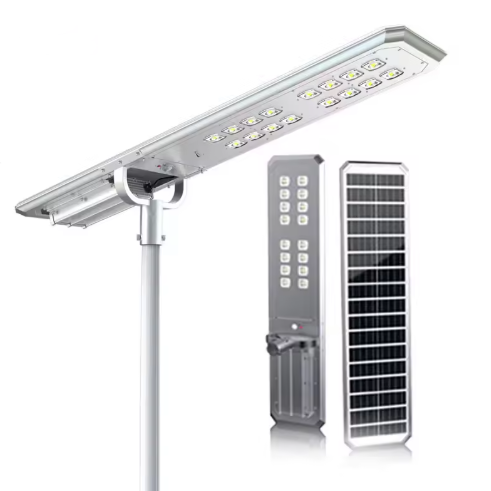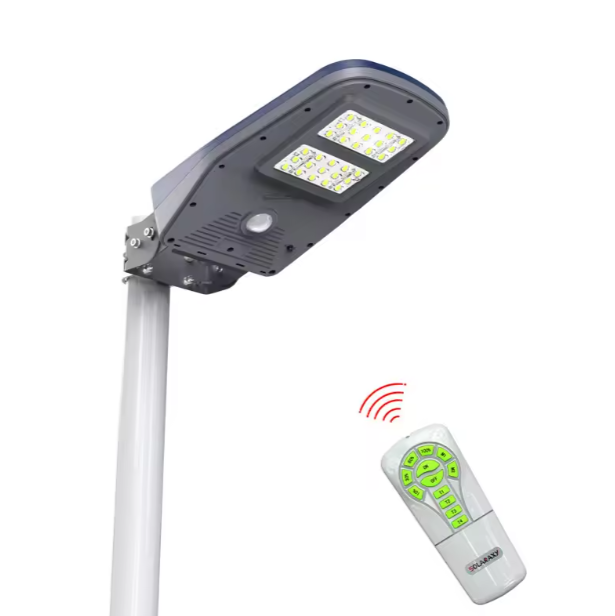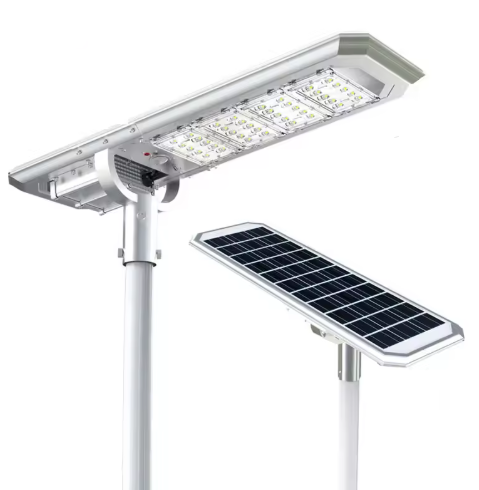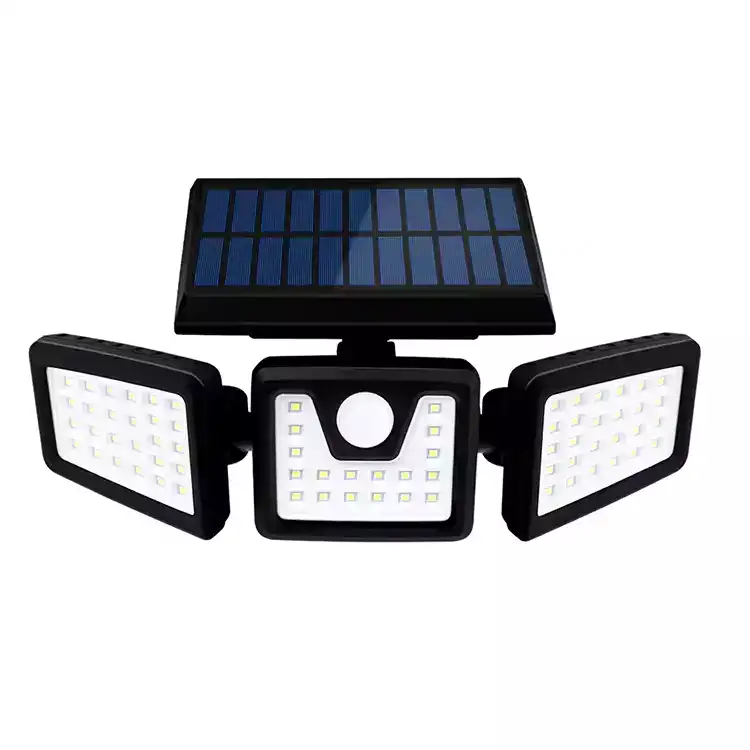

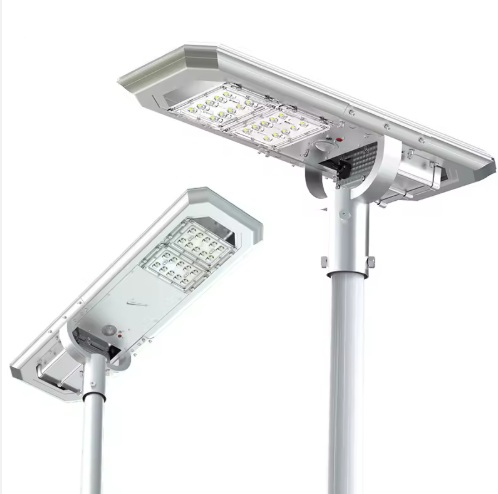
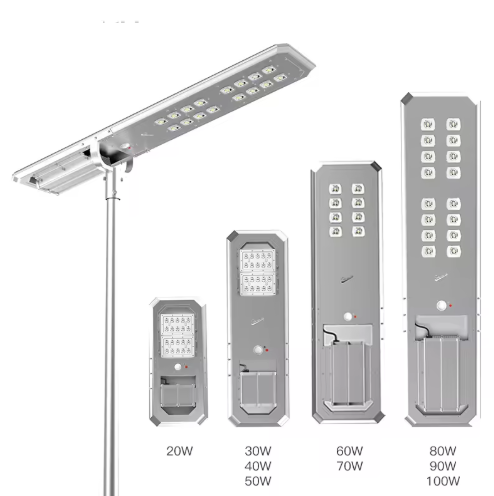
This IP65 waterproof all-in-one solar LED street light with an aluminium alloy body, tempered glass lens, 140 degree beam dispersion and designed for up to ten nights of autonomous operation delivers robust outdoor illumination, long service life, and low total cost of ownership for urban, rural, and industrial installations. The product combines high-efficacy LEDs, certified photovoltaic modules, modern battery chemistry, intelligent power electronics, and weatherproof mechanical design to meet performance needs while complying with major international safety and testing standards.
1 Executive summary and market positioning
This product design brings together integrated solar PV, battery storage, LED lighting, and control electronics in a single enclosure to minimize civil work and speed field deployment. Typical deployment offers simple pole mounting, wireless control options, motion-triggered dimming, programmable night schedules, and remote monitoring capability for fleet management. For clients prioritizing quick rollout, low maintenance and verified endurance under rain, dust, and heat, this type of integrated luminaire provides clear operational advantages.
Key investment drivers include lifetime lumen maintenance, battery cycle life, charge-discharge depth management, thermal management of LEDs, ease of replacement for wearable parts, and certifications that support warranty claims.
2 Key specifications
| Parameter | Typical value for this model |
|---|---|
| Rated ingress protection | IP6/IK |
| Housing material | Die-cast aluminium alloy with corrosion-resistant finish |
| Lens | Tempered glass, thickness 3–6 mm |
| Optical beam angle | 140 degrees (wide flood distribution) |
| LED source | High-efficacy SMD or COB LED modules, rated lifetime 50,000–100,000 hours (LM-80 data) |
| Rated luminous flux | 2,000–10,000 lumens |
| Color temperature | 5700K (Neutral White) |
| CRI | Typically ≥70, option for ≥80 |
| Solar panel | Monocrystalline PV, IEC 61215 compliant preferred |
| Battery | 18650 NCM |
| Charging temperature | 0-45℃ |
| Operating temperature | -20°C to +60°C typical field range |
| PIR Angle | 120° |
| PIR Distance | 8m |
| Install Height/ Distance Max | 2000lm:3m/15m; 4000lm:4m/15m; 6000lm:6m/22m; 8000lm: 8m/28m; 10000lm: 10m/32m |
| Wind rating | Depends on pole and mounting; check local codes |
| Warranty | 3 years |
3 Mechanical design and materials engineering
Aluminium alloy housing
The enclosure typically uses a high-strength aluminium alloy produced by die casting or extrusion. Aluminium selection focuses on tensile strength, corrosion resistance, weldability for specialist variants and thermal conductivity. Exposed finish includes multi-stage pretreatment with conversion coating and powder coating or polyester paint for both UV resistance and barrier protection. Stainless fasteners should be used for all external hardware to prevent galvanic corrosion when dissimilar metals exist.
Design features to note:
-
Integral heat sink fins cast into the body improve LED thermal conduction.
-
Internal chambers isolate electrical components from battery and PV junctions.
-
Drainage pathways and breather vents fitted with hydrophobic membranes relieve condensation without admitting dust.
Tempered glass glazing
Tempered glass offers mechanical strength, scratch resistance, and excellent optical transmission. For outdoor luminaires, glass is often coated or laminated to reduce glare and improve impact resistance. Typical glass thickness varies with luminaire size; thicker glass increases impact resistance but affects weight and wind load calculations. Consideration should be given to anti-reflective coatings or textured treatments if glare control is a priority.
Fasteners and seals
Gaskets made from silicone rubber or EPDM are preferred for long-term UV and temperature stability. All sealing surfaces must be designed for compression without extrusion. Threadlocker or captive fasteners reduce maintenance events.
4 Optical system and photometric performance
140 degree beam angle — what this means in the field
A 140 degree beam dispersion creates a broad horizontal spread. This wide pattern suits pedestrian paths, low-speed roads, parks and campus lighting where uniform coverage at lower mounting heights is required. Photometric planning should use IES or CIE software to model pole spacing, mounting height, and required illuminance levels.
LED module selection and lumen maintenance
LED modules should be supported by LM-79 photometric reports and LM-80 lumen maintenance data from the LED manufacturer. LM-79 provides photometric and electrical measurements for a complete luminaire. LM-80 offers long-term luminous flux depreciation data for LED packages, which allows TM-21 projections for lumen maintenance over thousands of hours. These tests underpin lifetime claims and are critical to strong warranty language.
Color and visual performance
Color temperature choices affect visual perception and safety. Cooler white (5000K) increases perceived brightness and contrast for roadway use. Warmer white (3000K) reduces skyglow and provides more comfortable lighting in parks and residential contexts. Provide options where the customer can select correlated color temperature and confirm that CRI meets local application needs.
Photometry, glare control and shielding
Use of proper secondary optics and reflectors ensures uniform roadway luminance with minimal direct glare. Louvers or optic lenses can help focus output into the useful zone, reducing wasted uplight that contributes to light pollution.
5 Power System Engineering and the Target of Ten Nights of Autonomous Operation
6 Electrical, thermal and surge protection design
Thermal management
LED lifetime correlates strongly with junction temperature. Design heat path from LED package through heat sink to ambient air. Aluminium housing serves dual roles for protection and thermal dissipation. Ensure thermal interface materials maintain conductivity under cyclic temperature changes.
Surge protection and lightning considerations
External surge arrestors for PV input, battery lines and load output protect sensitive electronics from transient overvoltages. Where site risks include frequent lightning, add external grounding, surge diverters and ensure compliance with local lightning protection codes.
Wiring, connectors and sealing
Use IP-rated cable glands and marine-grade connectors for PV and battery interfaces. Avoid field-installable weak points that invite moisture. For long-term reliability, design for minimal field wiring.
7 Standards, testing and certification
This section consolidates the most important standards that validate claims for waterproofing, photometric data, PV reliability, battery safety and luminaire safety. These standards are often referenced in procurement documents.
-
Ingress protection: IP ratings are defined by IEC 60529. An IP65 rating indicates complete protection from dust ingress and protection from water jets projected by a nozzle from any direction. This rating supports outdoor use in rain and dusty environments if seals remain intact.
-
Photometric and LED lifetime testing: LM-79 provides test methods for luminaire photometric and electrical measurements. LM-80 provides lumen maintenance testing for LEDs that supports life projections using TM-21 methodology. These data sources are central to warranty and performance claims.
-
PV module qualification: IEC 61215 series outlines design qualification and type approval test sequences for terrestrial photovoltaic modules, validating durability under environmental stressors.
-
Battery safety: IEC 62133 specifies tests for portable secondary lithium cells and batteries to demonstrate safety under normal operation and foreseeable misuse. Battery pack suppliers that hold this certification reduce chemical hazard risk.
-
Luminaire safety: UL 1598 covers safety for luminaires intended for installation on branch circuits and includes tests for wet location designation and mechanical integrity. Certification under UL or equivalent national standards is important for installations in jurisdictions that require local approvals.
Procurement teams should require third-party test reports, not simply self-declared compliance. Independent laboratory reports, serial-numbered test certificates and traceable batch documentation support audit and acceptance processes.
8 Installation, commissioning and maintenance
Pre-installation site survey
Perform a survey for:
-
Pole spacing and mounting height requirements for desired illuminance.
-
Solar obstructions: shading from trees, buildings, or nearby structures.
-
Soil conditions for pole foundations and wind exposure classification.
Mounting and alignment
-
Ensure pole strength meets combined luminaire weight and wind load.
-
Adjust photometric aim to align with roadway axis for best uniformity.
-
Confirm torque values for fasteners to avoid micro-movement that degrades seals.
Commissioning checks
-
Verify PV open-circuit voltage and short-circuit current match nameplate within tolerance.
-
Verify battery voltage and health metric.
-
Run test schedule through complete night cycle to confirm autonomy and dimming profiles.
Maintenance schedule
| Interval | Task |
|---|---|
| Monthly | Visual inspection for damage, glass cleanliness check, quick system status readout via controller LED or app |
| Every 3 months | Clean PV panels, check torque on external fasteners, inspect gaskets and drain paths |
| Annually | Full electrical test, battery capacity check, firmware update on controller if available |
| After storm | Inspect for impact, water ingress, lightning damage |
Parts designed for replacement:
-
Battery pack
-
LED module or driver board
-
External seal gaskets
Field technicians should carry spare gasket kits, torx/screw kits, battery disconnect tools, and a basic multimeter or handheld test instrument for commissioning.
9 Comparative evaluation and buyer checklist
All-in-one integrated luminaire versus distributed systems
| Factor | All-in-one solar luminaire | Distributed PV + remote luminaire |
|---|---|---|
| Civil work | Minimal | Extensive for wiring and foundations |
| Scalability | Fast rollouts, module replacement may be easier | Easier to scale capacity separately but more wiring complexity |
| Theft/vandal risk | Higher single-point risk | Lower if panels mounted on secure rooftop |
| Maintenance | One unit contains most wear items | PV and luminaire maintenance separate but possibly simpler replacement |
| Initial cost | Higher per-unit cost | Lower per-lamp cost in grid-connected contexts |
Buyer checklist
-
Request LM-79 photometric and LM-80 lumen maintenance reports.
-
Confirm PV module IEC 61215 test certificate.
-
Confirm battery IEC 62133 or equivalent safety test reports.
-
Check third-party IP testing report for IP65 or better.
-
Request device-level surge protection specification and lightning protection recommendations.
-
Verify firmware update method and remote monitoring options.
-
Compare manufacturer field references with similar climate and installation profiles.
10 Environmental lifecycle and recycling
Lifecycle impacts include embodied energy in aluminium, glass, PV silicon and battery cells. Key sustainability actions:
-
Use recycled aluminium alloys where strength needs can be met.
-
Select battery chemistries with established recycling streams; LiFePO4 recycling pathways are evolving and present lower risk relative to cobalt-rich chemistries.
-
Design for disassembly: captive fasteners, clear labeling of materials and modular battery packs enhance end-of-life recycling rates.
Procurement contracts may request a take-back arrangement or documented recycling plan for batteries to meet corporate sustainability goals.
11 Troubleshooting and common field defects
| Symptom | Likely cause | Immediate remedy |
|---|---|---|
| Diminished night run-time | Battery capacity loss or PV shortfall | Test battery state-of-health and inspect PV for shading or soiling |
| Water found inside enclosure | Gasket failure or improper sealing | Replace gasket, inspect seal surfaces, test for ingress post-repair |
| Flicker or intermittent light | Loose connector or driver fault | Check connectors, run diagnostics on LED driver |
| Rapid battery heating | Battery cell fault or overcharge | Disconnect battery and send to authorized service center |
Document incidents and batch numbers for warranty claims. For safety, battery packs should only be serviced by trained personnel.
12 Frequently asked questions (FAQs)
-
How does IP65 differ from IP66 or IP67 in real-world terms?
IP65 protects against dust ingress and water jets from any direction. IP66 improves to high-pressure water jets. IP67 provides temporary immersion protection. For roadside units that may face heavy rain and jet washing, IP66 or higher could be preferable. -
Can the tempered glass break under hail or vandalism?
Tempered glass has higher impact resistance than standard glass. However, severe impact may still damage it. Options include laminated glass or polycarbonate alternatives with UV coating for higher impact resistance, though polycarbonate may scratch easier. -
Why pick LiFePO4 batteries for a 10-night autonomy goal?
LiFePO4 offers long cycle life, thermal stability and predictable end-of-life behavior. These attributes reduce total cost of ownership over many years under cyclic duty. -
How is the 10-night claim validated?
Validation requires PV and battery sizing based on local insolation data, realistic load scheduling, temperature derating, and field testing across seasonal worst-case scenarios. Request third-party modeling reports or field test logs. -
Is remote monitoring necessary?
Remote telemetry reduces truck rolls and allows early detection of faults. For fleets larger than a few dozen units, remote monitoring delivers significant operational savings. -
What certifications should I require from suppliers?
Request LM-79, LM-80, IEC 61215 for PV, IEC 62133 for battery packs, IP test reports, and UL 1598 or equivalent for luminaire safety where local code requires. -
How to plan pole height for a 140° beam?
Low mounting heights (3–6 meters) work best for wide beam dispersion. Use photometric simulation tools to balance spacing and illuminance uniformity. -
How often should PV panels be cleaned?
Depending on site soiling rates, cleaning every 3–12 months is common. Heavily soiled industrial or desert sites require more frequent cleaning. -
What warranty duration is standard?
We provide 3 years warranty for this series solar street light. Each part of the product are easy to replace, and we have fault alarm system which will show you if there is any problem in the product. -
Can this unit integrate with existing smart city platforms?
Many modern controllers provide open protocols or API endpoints for integration. Confirm compatibility with your city’s asset management system before procurement.