

2 in 1 Solar Street Light
Products
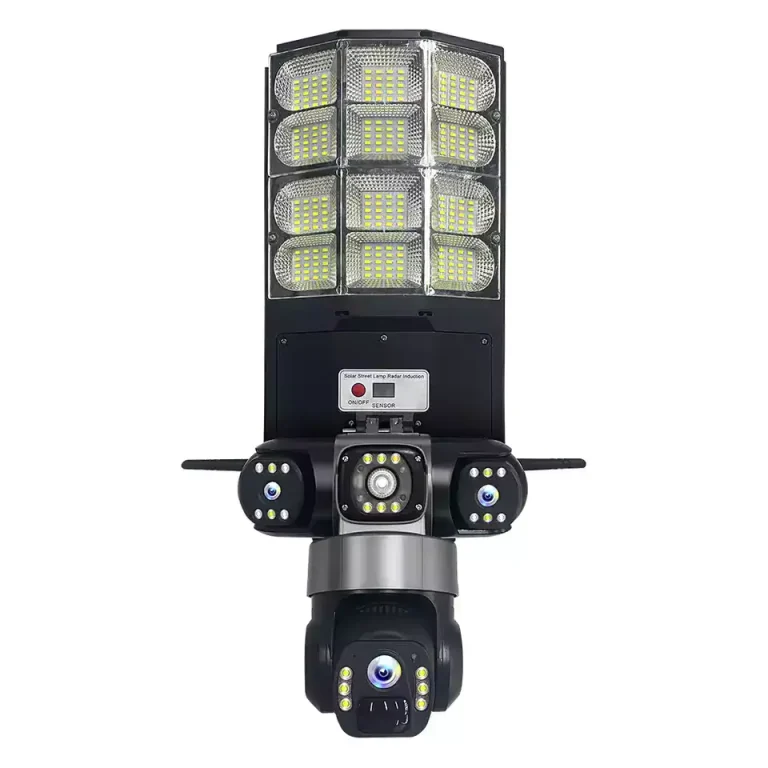

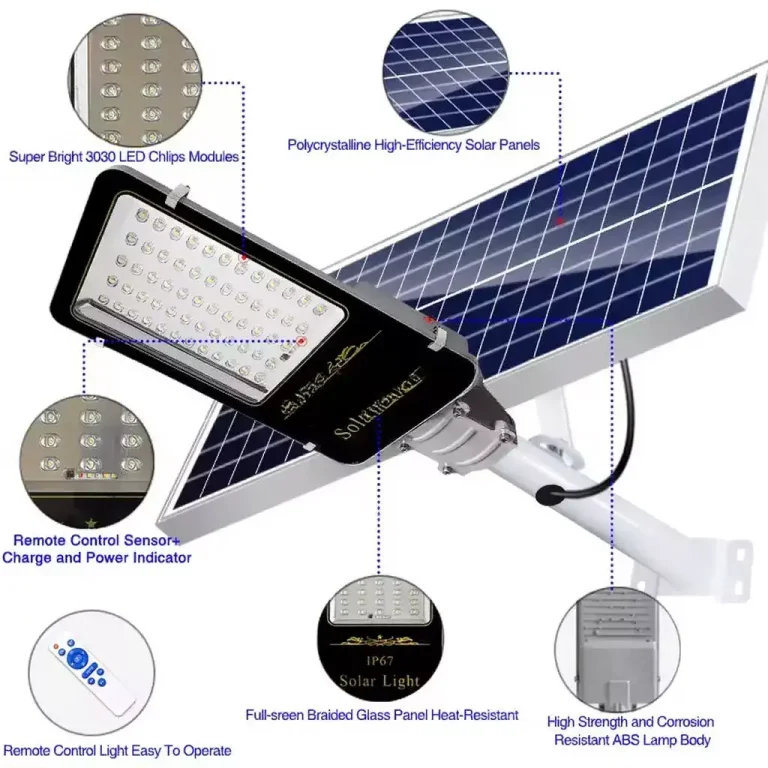
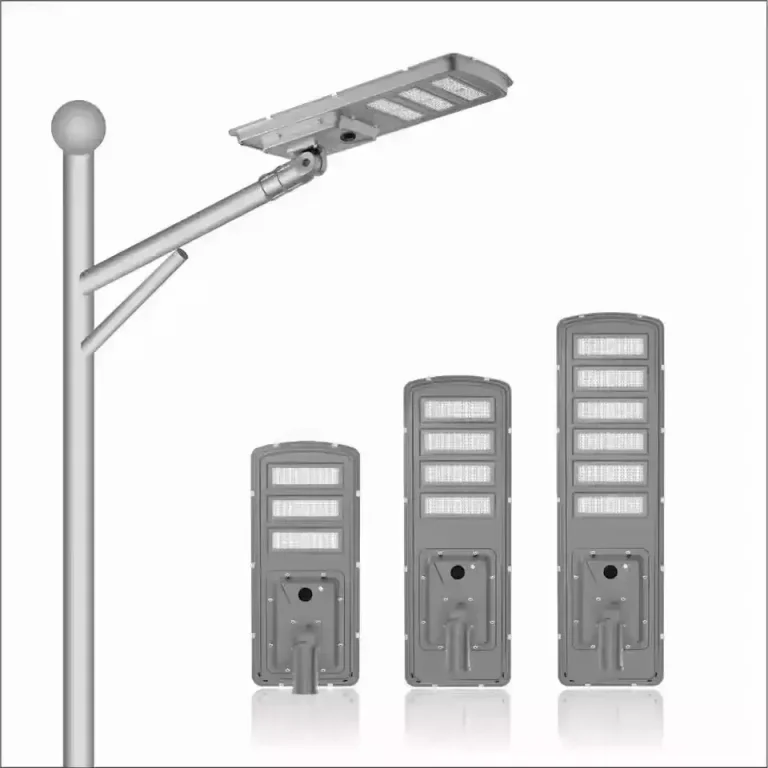
The 2-in-1 solar street light, often called “all-in-two” or “split” solar street light—combines a high-efficiency LED luminaire with a separately mounted solar panel and remote battery/controller pack to deliver flexible installation, easier maintenance, and scalable performance for municipal, commercial, and residential outdoor lighting projects. When properly specified and sited, these systems provide reliable nightly illumination with multi-night autonomy, smart control options, and a lower total cost of ownership than comparable grid-dependent solutions.
What “2-in-1” / “All-in-Two” means
-
Definition: A 2-in-1 solar street light typically places the solar panel and LED luminaire in two linked units: one unit that holds the photovoltaic module and another that contains the LED fixture, with batteries/controllers either inside the lamp body, in a separate enclosure, or at the pole base. This differs from “all-in-one” where panel, lamp, battery and controller are enclosed in a single housing.
-
Variants:
-
Panel detached, battery in pole: common for higher battery capacity.
-
Panel atop luminaire, separate controller: optimized for appearance but allows controller access.
-
Dual-panel designs: two PV segments to increase energy capture in limited pole area.
-
Core components and technical architecture
Short paragraphs for readability.
Photovoltaic module
-
Multi-crystalline or mono-crystalline cells are used; mono-crystalline (high-efficiency) is dominant in premium products. Panel sizing is governed by the site insolation and daily energy demand. Dual-panel designs are used where a single panel cannot supply the required energy or when tilt optimization is needed.
LED luminaire
-
High-efficacy LED arrays (often >120 lm/W in modern systems) with optical lenses or reflectors for roadway or area light distribution. Color temperature options typically range from warm white (3000 K) to cool white (5700 K), with 4000 K common for urban lighting. Product datasheets list lumen output, beam angle, and BUG (backlight, uplight, glare) classification.
Battery
-
Lithium chemistries, particularly LiFePO₄, are increasingly preferred for long cycle life, thermal stability, and depth-of-discharge performance. Typical autonomy targets range from 2 to 5 nights of stored energy, with larger installations designing for longer autonomy in cloudy climates. Lead-acid still appears in low-cost models but shortens service intervals.
Controller and power electronics
-
Maximum Power Point Tracking (MPPT) controllers yield higher PV harvest than PWM controllers under variable irradiance. Smart controllers integrate dimming profiles, motion detection inputs, temperature compensation, and remote telemetry capabilities.
Mechanical and enclosure
-
Aluminum die-cast housings, powder coating, and tempered glass lenses are common. IP ratings (IP65/IP66) and IK impact resistance ratings ensure outdoor durability. Thermal paths and heat sinks keep LED junction temperatures low to maintain lumen depreciation at modest levels over years.
Performance metrics and sizing methodology
Begin each subpoint as a short paragraph.
Key performance indicators
-
Luminous efficacy (lm/W), delivered lumens, uniformity, power draw, battery capacity (Ah and Wh), PV watt-peak (Wp), autonomy nights, and expected system lifetime (years). Provide measured or calculated lux levels at the ground for compliance with local standards.
Energy balance approach
-
Calculate required nighttime energy (Wh/night) from required lumen hours and fixture efficacy.
-
Add system losses (driver inefficiency, wiring, temperature derating).
-
Determine PV generation per day at site using local peak sun hours; then size PV array with a safety factor (commonly 1.2–1.6) to cover seasonal variation.
-
Size battery to meet autonomy requirement (Wh × autonomy ÷ usable depth-of-discharge).
This method yields a robust design suitable for municipal procurement.
Practical example (brief)
-
A streetlight requiring 6,000 lumens for 12 hours nightly at 120 lm/W uses 50 W average (6000 ÷ 120). Energy per night = 50 W × 12 h = 600 Wh. For 3 nights autonomy, battery = 1,800 Wh. With usable DOD of 80% (LiFePO₄), nominal battery ≈ 2,250 Wh. If site receives 4 peak sun hours/day and system losses are 25%, PV needed ≈ (600 Wh × 1.25) ÷ 4 h = ~187 Wp (round to standard 200–250 Wp modules or dual panel arrangement). This example follows common design practice used by manufacturers.
Installation, siting, and mounting best practices
Pole height and photometrics
-
Choose pole heights that meet target illuminance and uniformity: residential paths 3–6 m, roadways 6–12 m. Mounting height affects spacing and beam selection. Use photometric software to confirm spacing/height.
Panel orientation and tilt
-
Orient PV toward true south (northern hemisphere) with tilt near latitude for year-round performance. For split systems, panels can be mounted independently from the luminaire to optimize capture without changing pole geometry. Dual panels permit east/west tilt strategies in constrained poles.
Cabling and connectors
-
Use UV-resistant, outdoor-rated cables. Connectors should be MC4-equivalent and watertight. Cable runs should be protected from rodents and abrasion. Grounding of the pole and metal housings is mandatory for safety.
Accessibility for maintenance
-
Locate batteries and controllers in lockable cabinets at a reachable height, or in base compartments with theft protection. This reduces service time versus lifting an entire luminaire.
Control modes, intelligent features, and remote monitoring
Dimming schedules
-
Typical profiles: full intensity first 1–3 hours after dusk, followed by stepped dimming to 30–60% through night, or motion-triggered boost to full. Energy-profile customization is key to balancing visibility with battery life.
Motion sensors and PIR
-
Integrated motion activation preserves energy in low pedestrian environments while maintaining safety when presence is detected.
Remote telemetry and IoT
-
Modern controllers support LoRaWAN, NB-IoT, GSM or proprietary RF for centralized monitoring of energy production, battery state-of-charge, fault alerts, and firmware updates. Remote diagnostics reduce truck rolls and accelerate response.
Smart grid considerations
-
In hybrid or connected deployments, controllers can accept grid charging or export telemetry to city lighting management platforms for adaptive control and scheduling.
Durability, materials, ingress protection, and thermal design
Ingress protection and mechanical robustness
-
IP65 or higher is standard against dust and water jets; IP66 is preferred for harsher climates. IK07–IK10 protects against impact in public spaces. Powder-coated aluminum resists corrosion.
Thermal management
-
Heat sinks and thermal paths are crucial. LEDs must be mounted on MCPCBs with efficient heat conduction to the housing. Elevated junction temperature reduces lumen output and shortens life. Vendor datasheets often provide L70 or L90 lifetime projections at specified Tc temperatures.
Battery thermal protection
-
Batteries perform worse in extreme heat or cold. Active heating, passive insulation, or location in a thermally moderated cabinet extends life. LiFePO₄ tolerates higher temperatures but benefits from thermal management for reliability.
Operational economics and lifecycle
Total cost of ownership (TCO)
-
TCO includes initial capex, installation and pole costs, maintenance (battery replacement, LED driver), energy savings versus grid electricity, and decommissioning. Proper sizing reduces premature battery replacement and avoids over-specification.
Service intervals
-
LiFePO₄ batteries commonly achieve 3,000–5,000 cycles at moderate DOD—often translating to 7–12 years depending on depth of discharge and climate. LEDs typically maintain >70% lumen output for 50,000+ hours with correct thermal management. Controllers and connectors may require inspection every 2–3 years.
End-of-life and recycling
-
Batteries should be recycled per local regulations. LEDs contain minimal hazardous materials but should be decommissioned responsibly. PV modules often remain functional beyond the operational life of the battery and electronics; consider repowering or battery renewal programs to extend field life.
Procurement checklist and sample technical specification
Use this checklist when preparing an RFP or purchase order.
-
System type: 2-in-1 / all-in-two, with panel separated from fixture.
-
Nominal lumen output and target illuminance (lux) at mounting height.
-
LED efficacy (lm/W) and driver efficiency (%).
-
PV array size (Wp), panel type (mono/mono PERC), and power tolerance (+/- %).
-
Battery chemistry (LiFePO₄ preferred), nominal capacity (Wh), cycle life, usable DOD.
-
Controller type: MPPT with programmable profiles; telemetry options: LoRa/NB-IoT/GSM.
-
Protection: IP rating, IK rating, surge protection class (e.g., 10 kA SPD).
-
Operating temperature range and warranty (LED, battery, solar panel).
-
Certifications: CE / RoHS / IEC 60598 or equivalents for luminaires; IEC 62109 for PV; UN38.3 for batteries when shipping.
-
Spare parts availability and local service network.
-
Commissioning and photometric report for each lot.
Typical technical comparison table
| Parameter | Typical Value (Residential) | Typical Value (Roadway/Commercial) | Notes |
|---|---|---|---|
| Nominal LED power | 20–60 W | 60–200 W | Depends on required lux and spacing |
| Delivered lumens | 2,400–7,200 lm | 7,200–24,000 lm | Based on luminaire efficacy |
| LED efficacy | 110–150 lm/W | 120–150 lm/W | Higher for premium LEDs |
| PV array | 40–200 Wp | 200–600 Wp or higher | Dual panels common in high-demand cases |
| Battery capacity | 200–1,000 Wh | 2,000–10,000 Wh | LiFePO₄ recommended |
| Autonomy | 1–3 nights | 3–5 nights typical | Depends on climate |
| Controller | MPPT | MPPT with telemetry | MPPT improves harvest |
| Ingress rating | IP65 | IP66 | IP66 preferable for exposed sites |
| Typical lifetime | 7–12 years | 7–15 years | Battery replacement often earlier than PV |
(Values represent typical industry ranges for design comparison; finalize per site.)
Advantages and tradeoffs
Advantages (short bullets)
-
Flexible PV placement for better yield.
-
Easier battery and controller access for maintenance or replacement.
-
Scalable battery capacity for long autonomy.
-
Often supports larger PV arrays than integrated units.
Tradeoffs
-
Slightly more cabling and installation complexity than compact all-in-one units.
-
Visual footprint of separate panel mount may differ from integrated aesthetic.
-
Upfront capex can be higher if oversized to achieve long autonomy.
Common failure modes and troubleshooting
Short, actionable items.
-
Undercharging / low nightly operation: check panel orientation, dirt/soiling, MPPT performance, and cable losses.
-
Premature battery aging: verify depth-of-discharge, temperature extremes, and charger setpoints.
-
Flicker or driver failures: confirm driver model, surge events, and ingress water entry.
-
Communications loss: inspect antenna, SIM/data subscription (for cellular), or RF pairing.
Standards, certifications, and compliance
-
Look for luminaires compliant with IEC 60598, PV modules to IEC 61215/61730, and batteries tested to UN38.3 for transport. Surge protection and lightning mitigation standards may be necessary in some regions. Reputable suppliers provide declaration of conformity and test reports upon request.
Environmental and climate considerations
-
In cold climates, battery capacity effective Wh reduces; derating or insulation is required. In hot climates, elevated ambient temperature shortens battery life and reduces PV efficiency. Shade analysis is critical—shaded panels can dramatically reduce output. Design for local solar irradiance and seasonal variation.
Procurement: price drivers and negotiation tips
-
Price drivers: battery chemistry and capacity, panel efficiency, LED brand and binning, MPPT vs PWM, telemetry options, and warranty terms.
-
Negotiation items: extended warranty on battery, site commissioning included, spare parts and local service availability, and performance acceptance criteria (photometric verification). Request a sample set for pilot testing under expected local conditions before large roll-out.
Product differentiation opportunities
-
Emphasize durable LiFePO₄ battery packs with lockable cabinets.
-
Offer dual PV panel options for high-latitude or low-sun locations.
-
Provide turnkey remote monitoring with cloud dashboards and predictive maintenance alerts.
-
Bundle commissioning and photometric certification as standard.
-
Provide a configurable dimming schedule template per urban, residential, and rural categories.
Short case study concept
-
Replace conventional grid-fed lamps on a low-traffic rural road with 2-in-1 solar fixtures sized to 4 nights autonomy. Savings in trenching, ongoing energy cost, and faster deployment made payback in 3–6 years depending on electricity price and incentives. Include a short photometric and financial model when presenting to municipalities.
Frequently Asked Questions (FAQs)
Q1: What does “2-in-1” mean for solar street lights?
A1: It refers to systems in which the PV module and the LED luminaire exist as two closely connected units, permitting independent orientation of the panel and separate placement or housing of battery and controller. This increases installation flexibility and simplifies maintenance.
Q2: Which battery type is best for a 2-in-1 system?
A2: Lithium-iron phosphate (LiFePO₄) is preferred for its cycle life, safety, and lower lifetime cost. Choose cell proven cycle life and ensure thermal management is in place for hot environments.
Q3: How many nights of autonomy should I plan for?
A3: Typical designs use 2–5 nights. Choose the number according to local weather variability and criticality of lighting. More autonomy increases battery and PV size, raising capex but reducing outage risk.
Q4: Are MPPT controllers necessary?
A4: MPPT controllers harvest more energy than PWM under variable irradiance and are strongly recommended for higher-performance systems or where tilt/orientation differs from optimum.
Q5: Can 2-in-1 lights support smart city integration?
A5: Yes. Modern controllers can report status and accept commands via LoRaWAN, NB-IoT, GSM, or proprietary networks for centralized management and adaptive scheduling.
Q6: What maintenance should be expected?
A6: Routine tasks include panel cleaning, inspection of seals and connectors, battery state-of-health checks, and firmware updates when applicable. Battery replacement is the most likely major service event.
Q7: Which IP/IK ratings are recommended?
A7: For outdoor public installations, select IP66 for robust water protection and IK08–IK10 for vandal/impact resistance where necessary.
Q8: How do manufacturers differ?
A8: Differences include PV efficiency, battery chemistry and warranty, MPPT sophistication, luminaire optics, available dimming profiles, and service network. Evaluate vendors on photometric evidence, test reports, warranty, and local support rather than price alone.
Closing notes
If you’d like, SunplusPro can prepare a tailored spec sheet and a site sizing spreadsheet for a pilot (three to five lights) using your target illuminance and geographic coordinates. That pilot yields real-world performance data for final roll-out. I can also produce a short RFP template based on the procurement checklist above.