

Solar Flood Light
Products
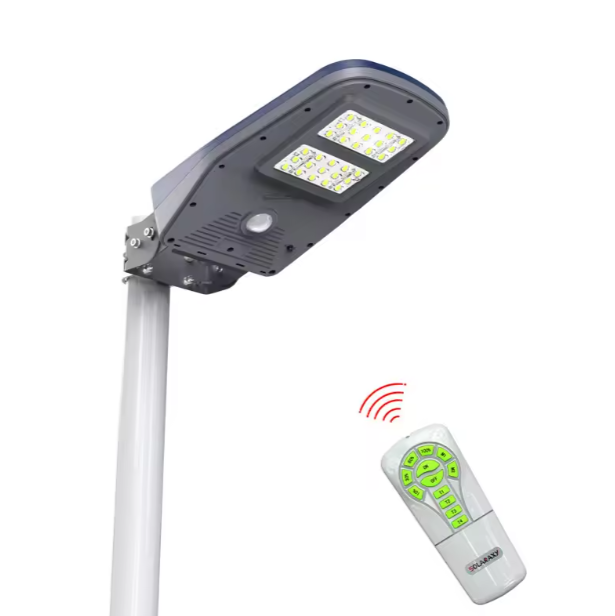

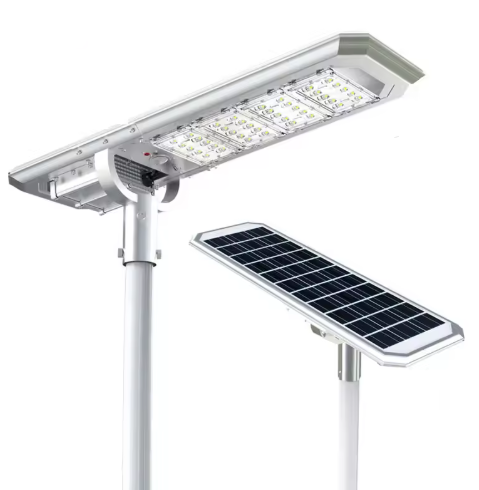
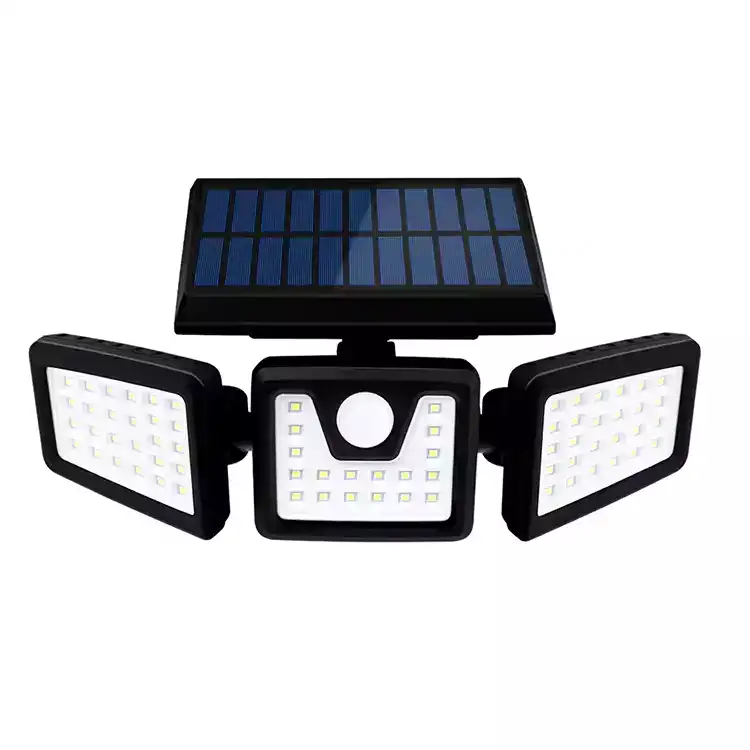
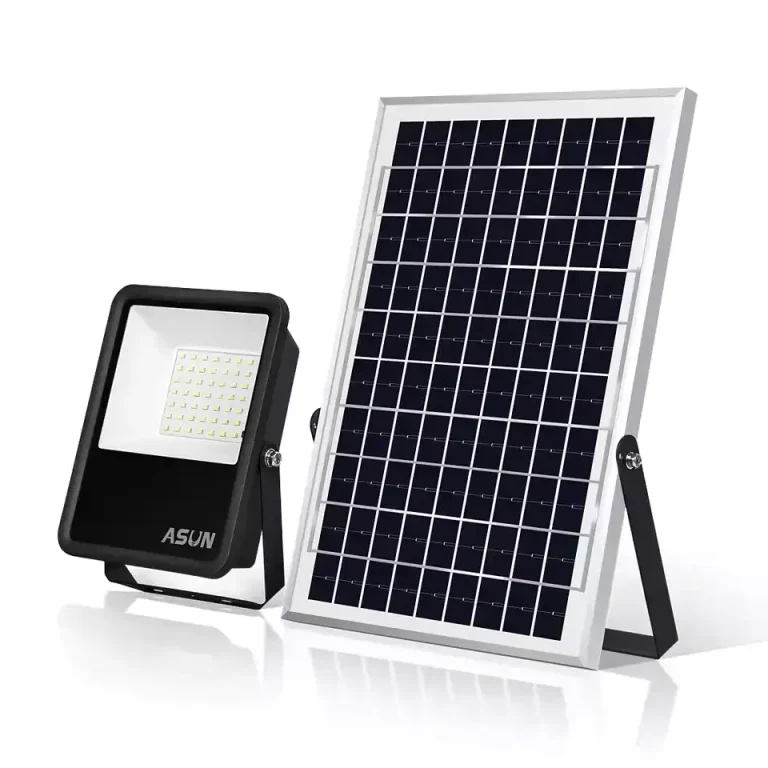
For reliable, high-performance outdoor illumination that minimizes running costs and simplifies installation, a well-engineered solar flood light with a quality monocrystalline panel, Lithium iron phosphate (LiFePO₄) battery pack, high-efficacy LED array, robust aluminum housing, and intelligent power management offers the best combination of brightness, endurance, and weather resistance for both residential and commercial sites.
What is a solar flood light
A solar flood light is an integrated outdoor luminaires system that harvests sunlight through a photovoltaic module, stores electrical energy in a rechargeable battery, and drives a high-efficiency LED array to produce broad-area illumination during nighttime hours. These units replace or augment wired floodlighting where trenching, grid power cost, or temporary deployment present problems.
Executive summary — key selling points
-
Off-grid operation that eliminates utility consumption for the lighting circuit.
-
Rapid deployment with minimal trenching and wiring.
-
Scalable outputs: from low-lux pathway illumination to multi-kilolumen site floodlighting.
-
Lower lifetime operating expenses when product selection matches site insolation and load.
-
Metal housings — especially die-cast aluminum — significantly improve thermal control, structural integrity, and corrosion resistance when finished correctly.
Core components and how each affects performance
Each subsystem contributes measurable performance and reliability factors.
Solar module. Panel efficiency determines how quickly daytime energy is harvested. Monocrystalline cells typically outperform polycrystalline in power density, enabling smaller panels for the same daily charge. Panel orientation, tilt, and shading directly change available energy.
Battery pack. Battery chemistry sets cycle life, depth-of-discharge rules, temperature behavior, and safety. Modern LiFePO₄ cells combine long cycle life and stable chemistry, making them a preferred choice for systems that require many years of service.
LED array. LED chip selection and binning control luminous flux per watt, color fidelity, and lumen maintenance. Secondary optics shape the beam and affect lux distribution on the target.
Charge controller and power management. MPPT or efficient PWM control, combined with an intelligent battery management system (BMS), protects the battery and optimizes runtime. Motion-sensing modes and dimming schedules let a single battery run longer by reducing average power draw.
Housing and thermal path. Heat is the enemy of LED lifetime and battery life. Rigid metal housings that double as heat-sinks help move heat from the LEDs and electronics to ambient air.
Design and materials — why metal choices matter
As a metal specialist, material selection is one of the highest-impact design decisions.
Die-cast aluminum body. Offers stiffness with low weight, excellent thermal conductivity for LED heat dissipation, and a strong base for powder-coat adhesion. Proper alloy selection and post-cast heat treatment reduce porosity and improve long-term corrosion resistance.
Corrosion protection. A multi-layer finish — chemical conversion, epoxy primer, and polyurethane powder coat — resists UV breakdown and salt spray attack. For coastal or industrial sites, consider stainless fasteners and a sacrificial anodic zinc or nickel pre-treatment.
Gasket and seal materials. Silicone or EPDM elastomers retain flexibility with temperature swings and maintain ingress protection.
Fasteners and articulation. Use stainless steel hardware for external fittings and stainless or coated pins for articulated heads to prevent seizing after repeated adjustments.
The mechanical design must balance ingress protection, thermal conduction, and serviceability—metal housings enable purposeful trade-offs that polymer-only products cannot match on heat-handling and structural integrity.
Performance metrics and sizing rules
Sizing a solar flood light requires quantifying the target lux, coverage area, autonomy (nights of backup), and available daily sun.
Key metrics:
-
Lumens: raw light output from the LED module.
-
Lux: illuminance on the surface; depends on beam angle and mounting height.
-
Luminous efficacy: lumens per watt of LED power.
-
Panel power (W): rated peak power under standard test conditions.
-
Battery capacity (Wh): determines how many hours the light can run at a given power.
-
Autonomy: number of nights the system must operate without recharge.
Recommended lumen ranges by application
| Application | Target illuminance | Typical lumen range (per fixture) | Notes |
|---|---|---|---|
| Pathway / garden accent | 5–20 lux | 200–800 lm | Use narrow-to-medium beams for reduced glare |
| Driveway / gate | 20–50 lux | 800–2,500 lm | Combine with motion sensing for efficiency |
| Backyard / patio | 20–100 lux | 1,000–5,000 lm | Adjustable heads are useful |
| Commercial security area | 50–150 lux | 5,000–20,000 lm | Consider multiple fixtures and overlapping beams |
| Sports or large site floodlighting | 100–500 lux | 20,000 lm and up | Typically hybrid systems or large solar arrays required |
Quick sizing rule of thumb
-
Estimate average nighttime energy demand (W) = LED power draw at chosen brightness.
-
Multiply by desired nightly runtime to get Wh energy per night.
-
Add autonomy factor (e.g., 2–3 nights) for battery capacity.
-
Choose panel wattage that, under average daily peak sun hours for the site, generates the required Wh (allowing for system losses and seasonal solar variance).
Charging time and realistic daily recharge depend on panel quality and insolation. Typical full-charge times range from about 6–10 hours of peak sun for properly matched systems.
Electrical design and battery management strategies
Selecting the right battery and control electronics greatly influences lifetime and performance.
Battery choices. Older designs used sealed lead acid or nickel-cadmium. Today’s commercial-grade solar lighting favors lithium chemistries—LiFePO₄ offers superior cycle counts and thermal stability. A BMS prevents overcharge and deep discharge, extending battery life.
Depth of discharge (DoD). Designing for a conservative DoD (e.g., 60–80%) increases cycle life. LiFePO₄ chemistry tolerates deeper cycles than lead-acid without rapid degradation.
Charge controllers. MPPT controllers extract the maximum energy from the photovoltaic module under varying irradiance. In small-scale integrated products, high-efficiency DC-DC regulation and smart dimming profiles matter more than raw controller complexity.
Smart modes. Motion-triggered boost, scheduled dimming, and ambient-light shutoff are practical ways to reduce average power draw. Adaptive algorithms that respond to seasonal changes can prevent battery depletion on cloudy runs.
Thermal considerations. Batteries perform best in moderate temperatures. Pack designs often include passive ventilation, thermal buffering, and location strategies—placing the battery within a thermally buffered compartment reduces exposure to extreme heat or cold.
Mechanical design: housing, coatings, and thermal paths
Good mechanical design increases uptime and reduces warranty claims.
Heat sinking. The LED array mount should be thermally bonded to the housing. Large surface area fins and conductive paths move heat into the ambient air and into the housing shell.
Serviceability. Modular battery trays and replaceable electronics simplify field swaps. Clear access panels with captive fasteners make maintenance faster and safer.
Adjustable mounting brackets. Multi-axis brackets let installers tilt the panel for optimal insolation and aim the optics independently.
Sealing and gaskets. Design seals for long-term compression set resistance. Replaceable gasket channels simplify field service.
Cable routing. Use conduit-friendly entry points and gland fittings sized for the expected cable diameter to retain IP rating.
Installation, aiming, and mounting best practices
Correct installation maximizes delivered energy and light distribution.
Panel placement. Install panels with unobstructed sun access for the longest daily direct sunlight, free from trees, buildings, and reflective glare. Tilt and direction should match site latitude for year-round performance.
Fixture height and aiming. Beam angle and mounting height map to illuminated area. For a 60° beam, mounting at 4–6 m provides broad coverage; for narrower beams, higher mounts increase throw.
Avoid mixed shading. Partial shading on even a small fraction of the panel can drastically reduce output due to series cell behavior. Use bypass diodes or multi-string panels to mitigate shading sensitivity.
Grounding and lightning protection. While many small solar flood lights are low-voltage DC and not grounded like mains fixtures, large commercial arrays must follow local electrical codes for earthing, surge protection, and bonding.
Commissioning. Test runtime across the chosen modes and verify battery state-of-charge after the first week. Re-aim optics if measured lux does not meet design targets.
Durability, IP/IK ratings, and standards to check
Ingress and impact ratings are essential for outdoor products.
IP rating. For most outdoor flood lights, minimum IP65 is recommended — dust tight plus water jets. For higher-pressure washdown or coastal exposure, IP66 or IP67 delivers added resilience.
IK impact rating. For vandal-prone or public spaces, consider IK08 or better to resist mechanical impact.
Certifications. Look for safety and EMC compliance in the target market: CE, RoHS, UL or ETL listings where applicable. For grid-interactive or commercial installations, additional approvals may be required.
Maintenance, diagnostics, and expected lifetimes
Planned maintenance reduces unexpected outages.
LED lifetime. High-quality LEDs with proper thermal management commonly reach 50,000 to 100,000 operating hours to L70, depending on drive current and temperature.
Battery lifetime. Lifetime varies by chemistry and DoD. LiFePO₄ packs may provide several thousand cycles when managed properly; lead-acid alternatives degrade faster under deep cycling.
Routine tasks. Clean the solar panel surface periodically; inspect seals and fasteners yearly; verify battery health and replace when capacity falls below product thresholds.
Remote diagnostics. Commercial products increasingly include telemetry — battery voltage, panel voltage, temperature logs, and runtime stats — enabling condition-based maintenance and remote troubleshooting.
Commercial vs residential variants
Two broad product families exist.
Residential models. Lower lumen outputs, simpler housings, integrated all-in-one designs, and lower cost. Typical features: motion sensor, dusk-to-dawn auto, and integrated panel.
Commercial models. Higher lumen outputs or arrayed fixtures, remote battery enclosures, separate larger panels, advanced BMS, and options for telemetry or hybrid grid charging.
Choosing between them is a mix of required lumen output, autonomy, maintainability, and cost of ownership.
Typical specification template
Use the following template when preparing a datasheet or quoting a customer.
| Field | Typical entry |
|---|---|
| Model name | SunplusPro SFL-X200 |
| Application | Residential security / small commercial area |
| LED output | 5,000 lm nominal |
| LED efficacy | 140 lm/W (chip + driver) |
| Color temperature | 3000K / 4000K / 5000K selectable |
| Solar panel | 60 W monocrystalline |
| Battery | 12.8 V LiFePO₄, 100 Ah (1,280 Wh) |
| Autonomy | 3 nights at standard mode |
| IP rating | IP66 |
| IK rating | IK08 |
| Operating temp | −20 °C to +60 °C |
| Mounting | Wall/ pole / adjustable bracket |
| Warranty | 5 years (fixture) / 3 years (battery) |
This template serves as a starting point for specification and procurement comparison.
Troubleshooting checklist
Short checklist for field technicians.
-
No light at night: check battery voltage and panel output under sun.
-
Short runtime: verify battery capacity, replace if degraded. Check for excessive clouding or shading.
-
Flickering: check driver connections and temperature; replace driver if unstable.
-
Water ingress: inspect gaskets and cable glands; replace damaged seals immediately.
-
Motion sensor false triggers: recalibrate sensitivity and check for heat sources or moving vegetation in the detection zone.
Frequently asked questions
Q1: How many lumens do I need for my driveway?
For private driveways, aim for 20–50 lux. Practically, a single well-aimed 1,500–3,000 lumen fixture or two smaller fixtures produce comfortable visibility. Mount height, beam angle, and the number of fixtures change the final lux; perform a simple layout to check overlap.
Q2: What battery chemistry should I choose for long life?
Choose LiFePO₄ for the best trade-off between cycle life, thermal stability, and safety for multi-year service. Designs that use lead-acid are cheaper initially but generally require earlier replacement and deeper seasonal performance loss.
Q3: Is a motion sensor necessary?
Motion sensors significantly reduce average energy consumption by increasing output only when needed. For security lighting, pairing motion-triggered full output with a low-level background glow is efficient and user-friendly.
Q4: What IP rating should I specify?
Minimum IP65 for general outdoor use. For heavy washdown, coastal salt spray, or high-pressure environments, specify IP66 or IP67. Consider IK impact ratings in public or vandal-prone spaces.
Q5: How do I size the panel and battery together?
Estimate nightly Wh need from LED power and runtime; multiply by your required autonomy. Then divide the required Wh by average daily peak sun-hours minus system losses to determine panel wattage. Allow margin for seasonal low sun periods.
Q6: Can solar flood lights work in cloudy or winter climates?
Yes if sized correctly. Use larger panels, higher capacity batteries, and smarter energy management modes. Systems designed for variable climates often include an autonomy buffer (2–4 nights) and adaptive dimming through low-sun periods.
Q7: What longevity can I expect?
LEDs in good thermal environments routinely reach 50,000 hours or more; batteries depend on chemistry and cycles—LiFePO₄ commonly offers multiple years with proper management. Product lifetimes differ by quality of components and environmental stressors.
Q8: Are there hybrid options that use grid or generator backup?
Yes. Commercial installations sometimes include hybrid charging (solar + mains or generator) to guarantee uptime through prolonged low-sun stretches. Hybrid control logic must safely manage charging sources to protect batteries.